
Recent Entries:
Month: March 2012
March 30, 2012
Amira Hasn’t Got a Clue

Amira Hass should to a better job of vetting the facts handed to her by Palestinian Christian leaders, because sometimes, these folks simply do not provide factual information to their supporters.
In her recent response to an op-ed by Israeli Ambassador Michael Oren about the status of Christians in the Middle East, Hass quotes a letter signed by 80 prominent Palestinian Christians who state the following:
“The exaggerated growth of the Christian population in Israel that Mr. Oren claims is due primarily to the immigration of Russian Christians whom Israel was unable to distinguish from the Jewish immigrants pouring into the country after the fall of the Soviet Union.”
Wrong. Wrong. Wrong.
Here are the facts from the Statistical Abstract of Israel.
One: There were 34,000 Christians living in Israel in 1949. The vast majority of them were Arab.
Two: At the end of 2009, there were approximately 152,000 Christians living in Israel. (An increase of 346 percent!)
Three: At the end of 2009, there were approximately 122,000 Arab Christians living in Israel. (The Central Bureau of Statistics has been tracking the population of Arab Christians in Israel since at least 2002.Just looking at these numbers reveals that the increase in the population of Christians in Israel is due primarily to the growth in the Arab Christian (and not Russian) community.
Even if every one of the non-Arab Christians came from Russia, the growth in this community would still be dwarfed by the growth of the Arab Christian community in Israel.
In other words, Hass got played by the Palestinian Christian leaders.
Ironically enough, Hass’s article is titled “Christian Palestinians: Israel ‘manipulating facts’ by claiming we are welcome.”
Who is manipulating the facts, really?
March 29, 2012
Anti-Israel Journalist Robert Fisk Accused by Colleagues of Fabricating Facts

Anti-Israel ideologue Robert Fisk, who is also a columnist for The Independent, has long been accused by media critics of unethical and unfactual reporting.
But now it is his former colleagues who are finally willing to expose Fisk for fabricating his facts, after he turned on them in one of his typical anti-Israel rants :
Yes, all honour to those who reported from Homs. But here’s a thought: when the Israelis unleashed their cruel bombardment of Gaza in 2008, they banned all reporters from the war, just as the Syrians tried to do in Homs. And the Israelis were much more successful in preventing us Westerners from seeing the subsequent bloodbath. Hamas forces and the “Free Syria Army” in Homs actually have a lot in common – both were increasingly Islamist, both faced infinitely superior firepower, both lost the battle – but it was left to Palestinian reporters to cover their own people’s suffering. They did a fine job. Funny, though, that the newsrooms of London and Washington didn’t have quite the same enthusiasm to get their folk into Gaza as they did to get them into Homs. Just a thought. A very unhappy one.
Damian Thompson, the editor of the Telegraph Blogs, interviewed Fisk about the damaging accusations against him.
Fisk remained defiant:
I do not make stories up, full stop. This is being put together in order to harass me and possibly The Independent…
…Colleagues will malign you if you’re a moderately successful journalist,
Unfortunately for Fisk, the accusations are piling up.
Sadly enough, this type of exposure, which would be a career killer for most journalists, will probably do nothing to cool the ardor of his biggest fans who depend on Fisk’s dishonest anti-Israel rants to “legitimize” their own.
March 29, 2012
Oil and Anti-Semitism

Saudi Prince Alwaleed Bin TalalHistorian Victor Davis Hanson asks “Why does the international community hate Israel so much?” The answers include not just the dimming memory of the Holocaust and, with that, the lessening restraint on anti-Semites and the far-left’s pernicious claim that Israel is an imperial force, but also the vast impact of Arab, especially Saudi, oil money spreading enmity toward the Jewish state.
[S]ince the 1960s, trillions of petrodollars have flowed into the Islamic Middle East, not just ensuring that Israel’s enemies now were armed, ascendant, and flanked by powerful Western friends, but through contributions, donations, and endowments also deeply embedded within Western thought and society itself. Universities suddenly sought endowed Middle East professorships and legions of full tuition-paying Middle East undergraduates. Had Israel the oil reserves of Saudi Arabia, then “occupied” Palestine might have resonated at the UN about as much as Ossetia, Kashmir, or the Western Sahara does today.
The recent One-State conference at Harvard University is but the most recent instance of the expanding influence of anti-Israel ideology in the academy, a shift occurring against a backdrop of millions in donated oil money.
Harvard’s Prince Alwaleed Bin Talal Islamic Studies Program is named after the donor of $20 million who underwrites that endeavor.
In the UK too, Alwaleed Bin Talal and other oil potentates have poured funds into universities, influencing discourse against both Israel and the West generally.
According to a 2011 Telegraph story:
Between 1995 and 2008, eight universities – Oxford, Cambridge, Durham, University College London, the LSE, Exeter, Dundee and City – accepted more than £233.5 million from Muslim rulers and those closely connected to them
(Bin Talal’s largesse in the form of a $10 million donation was rejected by Mayor Giuliani in the wake of 9/11 because of the Saudi’s linkage of the terrorist attack to Israeli treatment of Palestinians.)
March 28, 2012
Where’s the Coverage? Israel the Best Place in the Middle East – Maybe the World – for LGBT Rights

Lately, the media has brought us a number of stories about Israel and LGBT rights. New York Magazine featured a story on Manhattan’s Lesbian, Gay, Bisexual and Transgender Community Center in the heart of Greenwich Village. The Center, which rents space to various groups, has at the behest of board members and donors stayed away from hosting groups that organize around the Israeli-Palestinian conflict. Recently, however, the Center was the site of a protest demanding this policy be changed with organizers claiming, “Palestinian queers have reached out to us.” This is interesting, since Palestinian gays frequently seek asylum in Israel.
On the west coast, the Seattle LBGT Commission canceled a planned March 16 City Hall meeting with gay Israeli leaders over Israel’s treatment of the Palestinians, after pressure from activists who said that Israel touts its good record on gay rights to hide what they call poor treatment of Palestinians. This alleged PR campaign of subterfuge is called “pinkwashing” and was brought to prominence through a New York Times op-ed written by lesbian anti-Israel professor Sarah Schulman.
Israel’s gay rights record is undeniable. Israel has by far the most liberal LGBT policies in the Middle East, and the community enjoys acceptance in Israel rivaling that found anywhere. In a world-wide survey conducted by GayCities.com and American Airlines, Tel Aviv was voted the world’s best gay travel destination. As CAMERA previously reported:
In the Jewish state, thousands attend annual gay pride parades. Gay rights are well-protected. And, amazingly, scores of homosexual Palestinians from Gaza and the West Bank have infiltrated into Israel, preferring to illegally reside in a country long cast as enemy territory than to endure the extreme hostility they would face in their own societies.
Have you heard about Israel’s excellent LGBT rights record? Have you heard about the dangerous circumstances in which members of the community live in the Palestinian-administered territories? Have you heard about the many gay and suspected-gay youth murdered in Iraq? Have you heard about the numerous executions of homosexuals in Iran? Have you heard about the pervasive discrimination the LGBT community faces throughout the Arab and Muslim world?
Where’s the coverage?
March 26, 2012
UPI Captions Fueling the Conflict
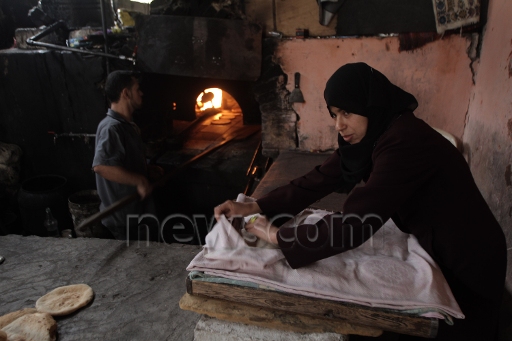
A series of United Press International (UPI) photos yesterday of a Gaza bakery are accompanied by captions which falsely place the blame on Israel for the Gaza Strip’s current fuel crisis. For instance,


But the current fuel crisis is caused by a dispute between Hamas and Egypt, and is not related to Israeli policy. As reported in the New York Times:
Also on Friday, Israel facilitated a delivery of fuel to the Hamas-run Gaza Strip to provide temporary relief for a fuel crisis stemming from a dispute between Hamas and Egypt. Shortages have caused power cuts of up to 18 hours a day in recent weeks.
With the situation in Gaza becoming more urgent, and the supply to hospitals threatened, Hamas agreed to the assistance from the West Bank-based Palestinian Authority and Israel as a temporary measure.
“This is no solution,” Adham Abu Salmia, a Gaza health official, told The Associated Press.
At the request of the Palestinian Authority, which has no access to Gaza, Israel allowed some 450,000 liters of fuel to be trucked through its Kerem Shalom border crossing on Friday, when it is usually closed. Maj. Guy Inbar, a spokesman for the Israeli authority responsible for the crossings, said that amount would be enough for no more than two days.
Over the last year, Hamas stopped paying the Palestinian Authority for Israeli-supplied fuel and relied on cheaper fuel smuggled through tunnels beneath the Gaza-Egypt border. In recent months Egypt has tried to end the practice and to have Gaza import fuel from Egypt legally, also via the Israeli border crossing, a request that Hamas refused. Hamas wants the fuel to arrive directly from Egypt to Gaza.
This is hardly the first instance of false charges regarding Israeli delivery of fuel to the Gaza Strip.
March 25, 2012
AP Withdraws Story of Gaza Death (Updated)
And now, the latest example of disinformation about Gaza casualties. The Associated Press has retracted its story about the March 23 death of a baby in Gaza after information emerged showing journalists had been duped by a Gaza official, and maybe even by the baby’s father.
The AP retraction, published today shortly after the original story moved, notes: “[T]he report has been called into question after it was learned that a local newspaper carried news of the baby’s death on March 4.”
The wire service then published a follow-up story with more details about the apparent Palestinian manipulation. It explains that “the report appeared to be an attempt by Gaza’s Hamas rulers to use it to gain sympathy.”
The original story, full retraction, and follow-up story are published below.
Original March 25 story:
Gaza baby dies after respirator runs out of fuel
A Gaza man says his baby died after the generator powering his respirator ran out of fuel — the first known death linked to Gaza’s energy crisis.
Abdul-Rahim Helou says his baby, Mohammed, relied on a respirator to help him breathe. Because of 18-hour-day power blackouts, Helou says he had used a gas-powered generator to keep his baby alive.
Mohammed died overnight Friday.
Helou said Sunday that he and his wife didn’t realize how much fuel they needed to keep their new generator going and it ran out overnight.
A Gaza health official said the baby arrived at a Gaza City hospital dead, having choked on its own phlegm.
The power shortage has been caused by a cut-off of Egyptian fuel.
March 25 retraction:
STORY REMOVED: Gaza-Power Cuts
GAZA CITY, Gaza Strip (AP) — The Associated Press has withdrawn its story about a 5-month-old baby who was said to have died Friday after the generator powering his respirator ran out of fuel, the first known death linked to the territory’s energy crisis. The timing and reason for the death were confirmed to the AP by a man identified as the baby’s father and a Gaza health official, but the report has been called into question after it was learned that a local newspaper carried news of the baby’s death on March 4.
A substitute story will be filed shortly reflecting the new information.
Follow up story:
A Gaza man said Sunday his 5-month-old baby died two days ago after the generator powering his respirator ran out of fuel, but the report was called into question after it emerged that the timing of the baby’s death was misrepresented.
The baby’s death — which was confirmed to The Associated Press by a man identified as the father and a Gaza hospital official — would have been the first linked to the territory’s energy crisis, and the report appeared to be an attempt by Gaza’s Hamas rulers to use it to gain sympathy.
The piece continues:
(more…)March 25, 2012
Ha’aretz, Lost in Translation, XI (Updated)

Ha’aretz Lost in Translation strikes again. This time it’s an Op-Ed by pro-settlement writer Karni Eldad, which states in the English version:
Jewish settlement in Judea and Samaria can be broken down into a number of periods – the settlement period, during which dozens of communities were established (mostly under the Labor Party, and much of it due to President Shimon Peres ); the agricultural period, during which settlers took over land, expelled, planted and sowed; and the period of tourism, during which wineries, bed and breakfasts, restaurants and tourist attractions were built under every tree. (Emphasis added.)
That an advocate of the settlements would allege that settlers “expelled” seems highly unlikely. Indeed, a glance at the original Hebrew version tells us that in fact Karni Eldad did not at all write that settlers “expelled.” The bolded English phrase above appears as follows in the original Hebrew:
תקופת החקל?ות, שבה נ?חזו המתיישבי? בקרקע, סיקלו, נטעו וזרעו
The translation of the bolded English section is actually:
the agricultural period, during which settlers held onto the land, cleared stones, planted and sowed.
Thus, while Eldad wrote that settlers cleared stones (“seeklu“), Ha’aretz‘s English editors insisted that the settlers “expelled” (“seelku“).
Furthermore, the Hebrew word “ne’achzu,” which Ha’aretz translates as “took over the land,” is not exactly that. While “taking over the land” has a negative connotation implying that it was taken over from someone, the word “ne’achzu,” which doesn’t have a precise English translation, does not imply the displacement of others. The infinitive of the Hebrew verb most accurately means “to hold on.”
Update, 8:33 EST — Ha’aretz has quietly changed the online article, replacing “expelled,” with “cleared stones.” The online story does not indicate that the earlier version was erroneous, as is customary in most media outlets. It remains to be seen whether the paper will issue a correct in the print edition, where the error also appeared.
Udate, March 26 — Ha’aretz commendably corrects in the print edition.
March 22, 2012
NYT Skews Coverage of Toulouse Terrorism

The New York Times is supposed to be the paper of record. Implicitly, it holds itself to a high standard of journalism. Its reporting on the massacre of Jews at a school in Toulouse, however, illustrates how the paper’s ideological bent, particularly its advocacy for the Palestinians, subtly interferes with its coverage of events that just tangentially touch upon the Israeli-Palestinian conflict.
In its first report of the killings on March 20, The Times recalls the recent history of anti-Semitic massacres in France. It establishes
The shooting on Monday was the deadliest anti-Semitic attack in France since 1982, when the Chez Jo Goldenberg restaurant in Paris was bombed at lunchtime, killing 6 people and wounding 22. In 1980, a terrorist group attacked a Jewish synagogue on the Rue Copernic in Paris, killing 4 people and wounding about 40.
The Times doesn’t say who committed these attacks except to identify the earlier attack as the work of a terrorist group. Both, in fact, were carried out on behalf of Palestinian terrorist groups. Their motives, it turns out, were similar to the one proclaimed by the current murderer.
March 22, 2012
Ha’aretz Photo Time Warp
A Ha’aretz story yesterday by Oz Rosenberg alleging “increasing Border Police harassment” of Palestinian children in eastern Jerusalem, including at schools, was accompanied by the following photo:

The caption in the English print edition reads:
Police detaining a Silwan teen on suspicion of throwing stones earlier this year.
But the Reuters photo is not from 2012. Nor is it from the last 12 months. The photo is actually from Jan. 28, 2011. The original Reuters caption reads:
An undercover Israeli police officer and border police officers detain a Palestinian youth on suspicion of throwing stones during clashes in the East Jerusalem neighbourhood of Silwan January 28, 2011. An Israeli police spokesperson said that a police officer and an Israeli woman were injured by rocks thrown at them. Israeli police detained four Palestinian stone-throwing youths during the clashes. REUTERS/Baz Ratner
So the photo is more than a year old, and not from 2012. If Ha’aretz could not find a relevant recent image of students being arrested or harrassed in or near their schools, then it’s acceptable to use a related file photo provided it is labeled accordingly. But it’s not acceptable to pass it off an illustrative file photo as if it is current. Stay tuned for a correction.
March 25 Update: After Presspectiva, CAMERA’s Hebrew department, communicated with editors, Ha’aretz has quietly changed the online caption, but has not issued a correction in print. Nor does the online edition indicate that the original caption misdated the date. The updated image and caption are below:

March 21, 2012
Two Faces of Palestinian Prime Minister Salam Fayyad


Palestinian Prime Minister Salam Fayyad, in a statement for publication, appropriately condemned the Jewish school attack by an Arab Muslim jihadist in France:
It is time for these criminals to stop marketing their terrorist acts in the name of Palestine and to stop pretending to stand up for the rights of Palestinian children who only ask for a decent life…
This terrorist crime is condemned in the strongest terms by the Palestinian people and their children … No Palestinian child can accept a crime that targets innocent people.
(Agence France Presse — English – March 21, 2012 Wednesday)But to his own people, Fayyad praised terrorists who kill innocent people:
“Prime Minister, Salam Fayyad opened his weekly radio address on March 24, 2011 by sending greetings to the Palestinian mother in honor of Mothers’ Day,” Palestinian Media Watch reports. Fayyad’s greetings included:
I make special mention of all the women prisoners who are mothers: Iman Ghazawi, who has been imprisoned for ten years; Qahira Al-Sa’adi; Irena Sarahneh; Latifa Abu Dhiraa; Ibtisam Al-Issawi; Muntaha Al-Tawil; and Kifah Qatash.
PMW explains that “Qahira Al-Sa’adi drove a suicide bomber to an attack in Jerusalem in 2002, in which 3 were killed. Irena Sarahneh drove a suicide bomber to an attack in the Israeli city Rishon LeZion in 2002, in which 2 were killed and dozens injured. Iman Ghazawi placed a bomb at the central bus station in Tel Aviv in 2001, which was discovered before it exploded. Latifa Abu Dhiraa smuggled a bomb into Israel for a suicide terror attack in 2003 that was uncovered before it was implemented.”






Search:
Search this site: