
Recent Entries:
Month: November 2010
November 29, 2010
Jerusalem Post: Media “Silent” on Fatah Intransigence

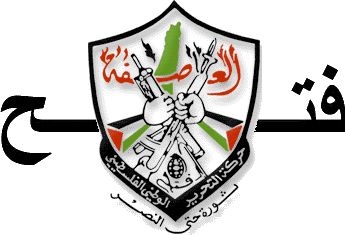
The Fatah emblemAn editorial in today’s Jerusalem Post, which describes the uncompromising positions staked by Mahmoud Abbas’s Fatah party at its recent convention, argues that the media’s indifference to the group’s intransigence betrays readers and perpetuates prejudice. Below is an excerpt. You can read the whole thing here.
THE FATAH council’s articulation of such an extremist position has far-reaching ramifications for the Israeli-Palestinian negotiations. That’s why Palestinian affairs correspondent Khaled Abu Toameh’s report on the council’s decisions appeared at the top of this newspaper’s front page on Sunday.
By bizarre contrast, the vast majority of local and international news outlets have so far refrained from reporting at all on Fatah’s hard-line declarations. While news media usually respond quickly and amply to steps taken by Israel that are perceived as potentially detrimental to the peace process, the silent treatment of the Fatah decisions reflects a media norm, in which Palestinian incitement and intransigence is often downplayed or completely ignored.
Just last Monday, for instance, this paper was the first to report on the PA Ministry of Information’s outlandish “study” claiming that the Western Wall, known to Muslims as Al- Buraq Wall, constitutes Wakf property and that “the Zionist occupation falsely and unjustly claims that it owns this wall.” Some other news outlets reported this several days later; others not at all.
Similarly, a survey commissioned by the Israel Project, indicating highly antagonistic Palestinian attitudes toward Israel, barely received media attention when it was released earlier this month.
Two-thirds of Palestinians living on the West Bank and Gaza agreed that “over time, Palestinians must work to get back all the land for a Palestinian state.” Sixty percent said that “the real goal should be to start with two states but then move it to all being one Palestinian state.” Fifty-six percent agreed that “we will have to resort to armed struggle again.”
When news reporters and editors fail to give the proper space to revelations of Palestinian extremism and intransigence, they help perpetuate prejudices against Israel. Not only is skewed journalism a betrayal of the profession and those who rely on it, in this case it hurts the peace process by untenably misrepresenting the imperative for compromise by the Palestinian leadership and their public, thereby dooming hopes for negotiated progress.
November 22, 2010
Murder in Beirut, Censorship in London?

Memorial Shrine for Rafik Hariri(Wikipedia Commons)Will the BBC cower in the face of Hezbollah threats?
It’s a legitimate question.
The BBC has reportedly delayed the broadcast of Murder in Beirut, a documentary about the assassination of former Lebanese Premier Rafik Hariri in 2005.
The documentary, which according to numerous reports, implicates Hezbollah in Hariri’s murder, was originally slated to air on Saturday Nov. 20, but the BCC pulled the show at the last minute and has so far not set a new broadcast date for the documentary.
The Guardian reports that insiders at the BBC “admit there is nervousness about its impact in the current volatile climate.” The Guardian provides more detail:
Nadim Shehadi, a Lebanon expert at the Chatham House thinktank in London, said: “There is an atmosphere of terror in Beirut. It may be a deliberate campaign to apply pressure to the tribunal. It is almost as if there is a communications strategy.”
The producer, Christopher Mitchell, told the Guardian: “It is true that the film’s transmission has suddenly been postponed. I am assured by the BBC that the series hasn’t been dropped. Stories about the Middle East are … highly sensitive and go through a lengthy period of fact-checking and approval. I hope it will appear in the near future. Was this justified? I don’t yet know, though I understand the sensitivities involved. Murder in Beirut tackles a difficult subject and everybody on the production worked hard to make sure it was as fair and accurate as possible. Naturally we are very disappointed that the broadcast has been delayed.”
A BBC spokesman said: “All programmes shown by BBC World News must comply with the BBC’s editorial guidelines. This applies equally to programmes we commission from the BBC, independents or, in this case, bought-in programmes. From time to time, the compliance process requires more time to complete. This can affect scheduling. This series of programmes falls into this category.”
If the BBC does back down and refrains from broadcasting the documentary, it will not be the first time that a major network has behaved in such a manner. In a piece published in The New York Times in 2003, Eason Jordan, a former news executive for CNN admitted that the network refrained from reporting about human rights abuses in Iraq for fear of reprisals against CNN employees.
The sad fact is that threats and violence affect coverage of the Middle East.
(more…)November 16, 2010
The Contagion Spreads: Jew Attacked in Genoa by Palestinian, Italians Flee
By now, the relationship between anti-Israel propaganda and anti-Semitism is readily understood by everyone but the most evasive. Arab and Muslim extremists in the Middle East portray Israel as a monstrous nation and its inhabitants worthy targets of violence. It takes a while, but eventually, this hostility expresses itself in anti-Jewish incidents in Europe and to a lesser extent, in North America. Some people express outrage, but for the most part bystanders do nothing and in some instances, run away from the confrontation for fear of putting themselves in harm’s way.
One recent manifestation of this process took place in Italy where an Israeli Jew, a student at Genoa University, was menaced by a Palestinian who apparently has done this sort of thing in the past. According to Ynet, his fellow students tried to protect him for a while, but eventually disappeared in the face of the assault. The police refused to investigate the attack until pressed by Jewish community leaders. The student who was attacked is abandoned by most of his friends and condemned for calling the police:
“Only one lone Italian student came up to me and said that he was willing to testify to the police about what happened. All the rest – even the guy who shares my dorm room and witnessed the incident – saw everything but are afraid to be associated in the case. The house mother at the dorms came up to me and said, ‘why are to turning to the police? It will ruin his life.’ In her opinion, if I’m kicked out of the dorms it would be the best solution.”
Robert Wistrich from Hebrew University in Jerusalem offers some insight into the process in a Nov. 15, 2010 interview in Arutz Sheva:
(more…)November 15, 2010
“The France Two news report is a blood libel. It’s a hoax. Fabrication. And that’s it.”
The image of a young Palestinian boy, Mohammed Al Dura, hiding behind his father during a gunfight in Gaza in 2000 helped generate several years’ worth of violence during the Second Intifada. The boy’s alleged death at the hands of Israeli soldiers in October 2000, confirmed what many extremists wanted everyone to believe — that Israel, the Jewish state, was a monstrous nation. In light of this image, anything that happened to Israelis during the ensuing years seemed understandable because well, they killed that little boy, what do they expect?
The image – and the story it told – was, in the words of Nidra Poller, a “lethal narrative.”
It took a while, but because of the work of Phillipe Karsenty, people have come to understand that the image, initially broadcast by France 2 Television, was a fake. It had to be. The little boy who was allegedly struck by numerous bullets, did not bleed. Neither did his father. There was no blood at the scene after they were taken away. A close inspection of the video reveals Al Dura lifting his arm up to see events unfold — after he was allegedly killed.
By repeatedly raising questions about the footage, Karsenty convinced most reasonable people that indeed, the footage was fake. He did not purport to know what actually happened to Al Dura, but merely demonstrated that the 50 seconds of video shown throughout the world by France 2 during the early days of the Second Intifada was not to be believed.
Karsenty, who successfully defended himself against a lawsuit filed by Charles Enderlin, the journalist who filed the report, got another chance to make his case on the Michael Coren Show on CTS Television in Canada. Appearing on the Nov. 11 broadcast Karsenty did not pull any punches: “The France Two news report is a blood libel. It’s a hoax. Fabrication. And that’s it.”
Still, the overwhelming evidence is not enough to convince some people. Another one of Coren’s guests, Palestinian activist Elias Hazineh, states that because Al Dura was a small child, he would not have bled very much even if he was hit by gunfire.
“If you’d been under fire as a child, scrolled under the corner for 10, 15 minutes or whatever, your blood would dry up before your hit. You’re not going to get much blood out of him.”
Yes, that is what he said.
November 9, 2010
Israeli Press Official Opens Up on His Experiences With Foreign Press
There is much of interest in outgoing Government Press Office director Danny Seaman’s interview with the Jerusalem Post.
Among the noteworthy points is Seaman’s view that skewed international reporting about Israel stems in large part from the Israeli media. When outspoken Israeli reporters vent their opinions to foreign correspondents who are unfamiliar with the region, he tells Jerusalem Post Editor-in-Chief David Horovitz, those views are transmitted without the context that Israelis are naturally familiar with.
Seaman:Unfortunately, the Israeli media is to a large degree responsible for a political indoctrination that represents only a small percentage of the Israeli public’s opinion.
Horovitz:The Israeli media is the original skewer of the conception of Israel, and the foreign media then plays into that?
Seaman: Absolutely. An example: During the war in Lebanon [in 2006], I was up North, among the journalists. In the evenings I saw the interaction between Israeli media and the foreign media. Some of the Israeli journalists were sitting there and making the most atrocious statements about the State of Israel. They had been p***ed off about a lot of things, unhappy with the way [the war was] being conducted. In some cases there was a political tone to what they were saying. That’s good and legitimate for the internal debate. But somebody from the outside doesn’t understand the basis for this or that argument. Yet [the Israeli journalists] are more than happy to convey their opinions to somebody from the outside, not understanding how somebody from outside perceives this. They’re legitimizing the delegitimization of the State of Israel.
This is perhaps the greatest threat that we have been facing over the past decade: It’s no longer a case of Israel versus the Palestinians. It’s a deliberate, concerted effort to delegitimize Israel’s existence. [Our enemies] tried to beat us on the battlefield. They tried defeating us on the low-intensity battlefield. When they lost on these two levels, they suddenly understood that the only way to fight us today is to delegitimize our right to exist…
Part of my problem with the foreign press – and I’ve been accused of being combative and feisty in fighting them – is that you have journalists coming in here not having the faintest idea of what is going on.
They live off what they get from their colleagues; they meet certain people who come from the same social-economic background; they live off of one newspaper, Haaretz. They don’t make an effort. When you have a conversation with them, you find that they have a complete lack of knowledge of the elementary issues.
November 8, 2010
Washington Post: Cat Stevens/Yusuf Islam a ‘mellow folkie’
Washington Post coverage of television’s Comedy Central October 30 rally in Washington, D.C. wavered between credulous and collaborative. It included this uncritical reference to one of the rally entertainers:
“ …. [M]ellow folkie Yusuf Islam (formerly known as Cat Stevens) had an interruptive session with metal-head Ozzy Osbourne.”
A generation ago Stevens, from Great Britain, had a string of folk-rock hits. In 1977 he converted to Islam and changed his name.
In 1989, he supported Iranian leader Ayatollah Khomeini’s fatwa (religious decree) calling for the death of author Salman Rushdie. Rushdie’s novel The Satanic Verses was deemed blasphemous. Though Islam denied calling for Rushdie’s death, the author said Islam’s interviews made clear he upheld the fatwa.
In 2000, Israeli authorities deported him for allegedly helping raise funds for Hamas (Islamic Resistance Movement), the terrorist organization responsible for the murders of hundreds of Israelis and visitors to Israel.
In 2004, his name appeared on the U.S. “no-fly” list and Islam was denied entry. The British foreign ministry protested. Two years Islam was admitted into the United States without incident.
In 2009, Islam said he would donate the proceeds from a record to the United Nations Relief and Works Agency (UNRWA, the U.N. arm that perpetuates Palestinian “refugee camps”) and to the Save the Children organization. An Israeli diplomat criticized Islam for not donating to all children harmed by violence, Arab and Israeli.
Islam has received numerous awards, mostly in Europe, for philanthropic activities. When the U.S. government denied him entry in 2004, Stephen Schwartz, writing in The Weekly Standard, said the singer was not a terrorist but rather a Muslim fundamentalist of the intolerant Saudi Arabian, Sunni Wahhabi school.
Whatever Cat Stevens/Yusuf Islam has become, The Post’s “mellow folkie” doesn’t begin to
describe it.November 2, 2010
Reason for Hope
A woman from Ramallah has spoken up against the problems in Palestinian society in a forceful way. The interview was translated and excerpted by MEMRI.
In an interview to a liberal Arab website, Palestinian reformist Zainab Rashid condemned the manner in which the Palestinian cause has been hijacked by Muslim extremism. A key quote:
“If we want this struggle to end, we must stop Islamizing the [Palestinian] cause by interpreting [current] affairs according to what is written in religious texts… How can we resolve this struggle while people, relying on the holy texts, still believe in the depths of their hearts that it will continue until Judgment Day, when the trees and rocks will call on the Muslim to come kill the Jews hiding behind them?
An extended excerpt from the interview can be found at MEMRI’s website, here.
November 2, 2010
Baghdad Church Invasion Highlights Christianity’s Handicaps in Middle East
The murder of a few dozen Christians at the Church of Our Salvation in Baghdad on Nov. 1, 2010, has directed attention to problems that were barely referenced in the final “official” statement issued by the Synod of Bishops from the Middle East last month – unrelenting hostility toward Christians on the part of Muslim extremists in the region and the failure of government officials to protect the rights of religious and ethnic minorities in their countries.
(more…)November 1, 2010
New Admissions by Hamas Underscore Flaws in Goldstone Report
In the wake of Israel’s military incursion into Gaza on Dec. 27, 2008, the Jewish state was accused of employing indiscriminate violence against the Palestinian civilian population. The alleged evidence rested on the tally of civilian casualties reported by Palestinian non-governmental organizations like the Palestinian Centre for Human Rights (PCHR). PCHR estimated that 84 percent of the 1417 Palestinian dead were civilians and only 236 were combatants. These figures formed the basis of reports condemning Israel by human rights groups like Amnesty International, Human Rights Watch and, most importantly, the United Nations Human Rights Council. In its Gaza Mission Report (The Goldstone Report), the UN council gave credibility to the casualty figures provided by PCHR and other groups, which claimed disproportionately high civilian casualties, while rejecting Israeli figures of at least 709 combatants and 295 confirmed civilian deaths.
On Monday, Nov. 1, 2010, Hamas Interior Minister Fathi Hamad contradicted the PCHR figures. According to Agence France Presse (AFP) and others reporting on the interview, Hamad
told the London-based Arabic newspaper Al-Hayat that between 200 and 300 Hamas fighters were killed during the 22-day onslaught in addition to hundreds of civilians.
“They say the people suffered from this war, but is Hamas not part of the people? On the first day of the war Israel targeted police stations and 250 martyrs were killed, from Hamas and other factions,” he told the paper.
“In addition to them, between 200 and 300 fighters from the Al-Qassam Brigades (Hamas’s armed wing) and another 150 security forces were martyred.”
His numbers roughly match the 709 “terror operatives” the Israeli military said it had killed during the fighting, which included members of the Hamas-run police force that has patrolled Gaza since the group seized power in 2007.This admission follows the admission by another Hamas operative named Abu Khaled, who acknowledged in an interview with the Christian Science Monitor that most of the Hamas policemen are members of the Hamas military organization as well. The Goldstone Report also sided with PCHR and other groups in describing the policemen killed by Israeli air strikes on the first day as primarily civilians.
What are the next steps?
The UN Human Rights Council should immediately correct the Gaza Mission Report.
(more…)

Search:
Search this site: