
Recent Entries:
Month: June 2017
June 15, 2017
“Tragic Inaction on Congo”
An Op-Ed in the International New York Times today discusses, as its headline puts it, “The U.N.’s tragic inaction on Congo.”
The piece focuses on the tragic killing of two Westerners in the Democratic Republic of Congo. The pair were working for the United Nations, which, the authors protest, has failed to investigate the killings. The authors link the incident to a wider phenomenon: “their deaths are a reminder of how little attention is paid to the killings of hundreds of Congolese in the Kasai region since last August,” they say, noting the recent discovery of dozens of mass graves in the region.
The passive voice here — “little attention is paid” — means readers aren’t told who, exactly, isn’t paying attention. But if history is any indication, the same newspaper publishing this Op-Ed is a prominent example of those guilty of paying relatively little attention to violence in Congo.
The book Stealth Conflicts: How the World’s Worst Violence is Ignored, by Virgil Hawkins, shows that The New York Times largely overlooked the deaths of nearly two million people during the first two years of fighting in the DRC.
The discrepancy between how the newspaper covered that violence and the fighting between Palestinians and Israel starting in 2000 is highlighted by a striking graphic in Hawkins’ book:

Tragic inaction on Congo, indeed.
June 14, 2017
AFP Falsely Reports: Hamas Accepts State ‘Limited to 1967 Borders’
Influential wire service Agence France Presse falsely reported yesterday that Hamas’ May 1 policy document accepts a Palestinian state “limited to the 1967 borders” (“Gaza: Palestinian territory ravaged by war, poverty”).
In no way does the new Hamas document signal an acceptance of a Palestinian state “limited to the 1967 borders.” In fact, it says the exact opposite. The wording is:
Hamas rejects any alternative to the full and complete liberation of Palestine, from the river to the sea. However, without compromising its rejection of the Zionist entity and without relinquishing any Palestinian rights, Hamas considers the establishment of a fully sovereign and independent Palestinian state, with Jerusalem as its capital along the lines of the 4th of June 1967, with the return of the refugees and the displaced to their homes from which they were expelled, to be a formula of national consensus. . . .
A real state of Palestine is a state that has been liberated. There is no alternative to a fully sovereign Palestinian State on the entire national Palestinian soil, with Jerusalem as its capital. (Emphases added.)
In an interview with Reuters, Hamas’ Mahmoud al-Zahar emphasized that the new document is a “mechanism” for Hamas’ pledge “to liberate all of Palestine.” Reuters reported:
One of Hamas’s most senior officials said on Wednesday a document published by the Islamist Palestinian group last week was not a substitute for its founding charter, which advocates Israel’s destruction.
Speaking in Gaza City, Mahmoud al-Zahar, a regular critic of Israel, said the political policy document announced in Qatar on May 1 by Hamas’s outgoing chief Khaled Meshaal did not contradict its founding covenant, published in 1988.
Trailed for weeks by Hamas officials, the document appeared to be an attempt to soften the group’s language towards Israel. But it still called for “the liberation of all of historical Palestine”, said armed resistance was a means to achieve that goal, and did not recognise Israel’s right to exist.
“The pledge Hamas made before God was to liberate all of Palestine,” Zahar said on Wednesday. “The charter is the core of (Hamas’s) position and the mechanism of this position is the document.

June 13, 2017
CNN Errs on New Hamas ‘Charter,’ Gaza Unemployment
June 14 Update: CNN Corrects on New Hamas ‘Charter,’ Gaza Unemployment
In his article today, “What the Qatar crisis means for Hamas,” CNN International’s Ian Lee errs on Hamas and Gaza unemployment.
First, the article twice falsely refers to a new policy document that Hamas issued on May 1 as a “new charter.” The article begins:
When Palestinian militant group Hamas announced its new charter to the world, it wasn’t from Ramallah or Gaza City, but from the Sheraton hotel’s gilded Salwa Ballroom in Doha.

Further down, the article repeats the incorrect reference to a “new charter,” stating:
Last month, a new leader was announced — Ismail Haniya taking over from long-time leader Meshaal — at the same time as the militant group issued its new charter.

But as CNN correctly reported at the time, in the very article hyperlinked in the first erroneous reference to a “new charter,” Hamas issued a new policy document on May 1, not a new charter. As CNN’s May 3 article reported: “The Palestinian militant group Hamas unveiled a new policy document Monday . . . ” The earlier CNN story repeatedly refers to the document as a “document” and not a charter, because it was not a “new charter.”
Hamas itself refers to the new policy statement as “A Document of General Principles and Policies” — not a charter.
Hamas’ own Mahmoud al-Zahar made clear that the new document does not in any way replace the founding charter of 1988. As Reuters reported:
One of Hamas’s most senior officials said on Wednesday a documentpublished by the Islamist Palestinian group last week was not a substitute for its founding charter, which advocates Israel’s destruction.
In a second, unrelated error, Lee reports:
According to the United Nations, the unemployment rate in the strip hovers around 65% and one million people rely on food handouts from the UN’s Palestinian refugee agency.

In fact, United Nations documents put Gaza’s unemployment at below 45 percent, not at 65 percent. According to the “Gaza Situation Report, 197 30 May – 5 June 2017 target=_blank” published by UN Relief and Works Agency for Palestine Refugees in the Near East,
In the first quarter of 2017, according to the Palestinian Central Bureau of Statistics, the unemployment rate in Gaza stood at 41.1 per cent, one of the highest rates worldwide.
Also, according to this May 3 UN document:
In the fourth quarter of 2016, the joblessness rate stood at an average of 40.6 per cent – 68.6 per cent for women – according to the Palestinian Central Bureau of Statistics (PCBS).
CAMERA has contacted CNN to request corrections. Stay tuned for an update. Readers may also contact CNN International on Twitter.
See also: “In English, Haaretz Upgrades Hamas’ New Document to New ‘Charter'”
June 12, 2017
The Washington Post: We Print ‘Commonly Used’ Falsehoods

The Washington Post defends its use of inaccurate language on the grounds that its use is frequent.
As CAMERA has noted (“The Washington Post’s Troubling Trend Towards Israel”) a May 29 Post report (“A daily commute through Israel’s checkpoints”) claimed that “The Israeli occupation of the Palestinian territories of the West Bank and the Gaza Strip began 50 years ago in June [emphasis added].”
However, as CAMERA pointed out to Post staff: The status of the territories is disputed and no Palestinian state has ever existed. The Post itself noted as much in a Sept. 5, 2014 CAMERA-prompted correction, among other instances. That correction stated, in part: “The Israeli-occupied territories are disputed lands that Palestinians want as a future state.”
Despite this acknowledgement, the paper continues to inaccurately describe the West Bank and the Gaza Strip as “Palestinian land”—including in a Jan. 2, 2015 article that appeared within three months of the correction noted above (“When is a Correction an Error? When The Washington Post Says So,” CAMERA, Jan. 9, 2015).
When CAMERA contacted The Post about the May 29, 2017 report, it pointed out that a story in the June 6, 2017 edition rightfully stated, “The status of Gaza and the West Bank are still in dispute, with the Palestinians hoping the two territories will eventually make up an independent state.”
Yet, as it has done on some previous instances, The Post declined to correct its May 29th report. The reason? The phrase “Palestinian territories” is “informal” and “widely and commonly used to refer to the West Bank and Gaza; there have been more than 1,000 such references in The Post alone in recent years.”
As CAMERA pointed out in a June 8, 2017 Times of Israel Op-Ed “The Washington Post’s Cognitive Dissonance,” the paper has a habit of contradicting itself and displaying an alarming inconsistency when it comes to using precise—and accurate—language.
The Washington Post’s own publishing guidelines claims that the paper “always seeks to publish corrections and clarifications promptly after they come to our attention.” Except, it might be added, when falsehoods are “widely and commonly used.”
June 12, 2017
Award-Winning Swedish Journalist Carries Out Terrorist Attack

The perpetrator responsible for carrying out a June 6, 2017 terrorist attack at the Notre Dame cathedral in Paris was an “award-winning journalist” who previously worked as a freelancer for Swedish public radio,” according to an Algemeiner article by analyst Ben Cohen (“Islamist Perpetrator of Attack at Paris Cathedral was Award-Winning Journalist in Sweden,” June 7, 2017).
That journalist turned terrorist, Farid Ikken, used a hammer to attack a French police officer outside of Notre Dame, a popular tourist spot and place of worship. Ikken reportedly yelled, “This is for Syria” during the attack. He was subsequently shot by an armed police officer. In addition to the hammer, two knives were found on his person. Ikken was taken to the hospital for treatment and questioning by French authorities.
An Algerian national, Ikken moved to Sweden to 2004 and studied journalism at Uppsala University. He worked as a freelance journalist for several Swedish media outlets, including Swedish national public radio (SR). In 2009, Ikken won a European Union (EU) journalism award for a report on healthcare and asylum seekers in Sweden.
Sweden itself has experienced several Islamist terrorist attacks in recent years. On April 7, 2017, Rakhmat Akilov, an asylum seeker from Uzbekistan, used a hijacked truck to run over men, women and children in a shopping center in Stockholm. The attack murdered five people and injured 15. Akilov had expressed support for the terror group Islamic State in Iraq and Syria (ISIS).
Vehicular assaults are a common terror tactic used by Palestinians against Israelis, as CAMERA has noted. Despite the shared threat presented by Islamist terrorism, some Swedish officials have chosen to attack the Jewish state. Among other acts, Sweden has previously granted visas to members of Hamas, U.S.-designated terror group whose charter calls for the destruction of Israel and the genocide of Jews (“Senior Israeli Official: Sweden is the Country Most Hostile to Israel,” CAMERA, April 27, 2006).
As CAMERA has highlighted, Swedish schools have also been caught distributing schoolbooks that praise anti-Jewish violence and depict all of Israel as “Palestine (“School in Sweden Teaches Pupils Israel Doesn’t Exist,” Feb. 1, 2016).”
June 7, 2017
USA Today Coverage of 1967 War Blurs Important Truths

USA Today’s “50 years after Six-Day War, Israel-Palestinian borders are still fuzzy” (June 5, 2017) omitted important information about the “occupation” of territories seized by Israel during the 1967 war and the anti-Jewish violence that preceded it.
The report, by journalist and writer Noga Tarnopolsky, provides readers with some key details missing in media coverage elsewhere. For example, the article correctly noted that the “Green Line,” the armistice line that followed the Arab-initiated 1948 War against the Jewish state, is “temporary” and that “final borders [were] to be worked out in the future.” By contrast, other major media outlets, such as The Washington Post, have incorrectly implied that the “Green Line” is a recognized and established border (see, for example “The Washington Post’s Troubling Trend Towards Israel,” CAMERA, June 5, 2017).
However, USA Today fails to inform readers as to why final borders weren’t worked out: Palestinian and Arab rejection of peace with and recognition of the Jewish state, even at the cost of creating a Palestinian one.
As CAMERA has noted, the U.S. and Israel have extended numerous offers for a Palestinian state, in 2000 at Camp David, 2001 at Taba and 2008 among other instances. Palestinian leaders, refusing to so much as submit a counteroffer, refused each of them.
Indeed, as foreign affairs analyst Clifford May pointed out in a Washington Times commentary, shortly after Israel seized the West Bank and the Gaza Strip during the 1967, from Jordan and Egypt respectively, it extended offers to return these territories—both of which had been occupied by these Arab nations since the 1948 War. Arab leaders spurned these offers at the subsequent Khartoum conference—a fact that USA Today omits (“The Six-Day War and the 50-year occupation,” June 7, 2017).
As May succinctly put it, the 1967 “war and the motive behind it”—genocide of the Jews and the destruction of Israel—“caused the occupation—not the other way around.”
USA Today has previously failed to note Palestinian rejectionism, as CAMERA has highlighted (see, for example “USA Today Omits Israeli Peace Offers While Covering ‘Peace Push,’” May 26, 2017). However, the omission of this pertinent information in a more than 1,500-word article on the “occupation” is stark. Particularly given that considerable portions of USA Today’s report focus on eastern Jerusalem—and the rejected 2008 offer would have given Palestinians a state with its capital there.
Elsewhere, the paper omits crucial context, claiming: “Israel does not treat East and West Jerusalem equally when it comes to spending on infrastructure. The western side gets the lion’s share of improvements.” However, this too omits Arab responsibility. As CAMERA has pointed out (“The New York Times, the ‘Newspaper of Broken Record,’” Oct. 18, 2015), Arab neighborhoods in eastern Jerusalem often build illegally, without permits, creating infrastructure problems. Additionally, many Arab-dominated areas of eastern Jerusalem refuse to pay taxes or take advantage of their ability to vote in municipal elections; hindering their ability to address such issues.
June 2, 2017
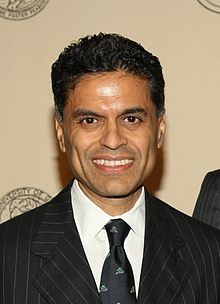
The Post Prints Fareed Zakaria’s Fake News on Iran

A May 25, 2017 Washington Post Op-Ed by CNN host Fareed Zakaria misled readers about the extent of the Islamic Republic of Iran’s connection to terrorist groups.
Zakaria’s commentary (“How Saudi Arabia Played Donald Trump”) focused on Saudi Arabia’s connection to Islamist terror groups. The host of CNN’s self-described “flagship foreign affairs show,” entitled GPS, correctly pointed out that “for five decades, Saudi Arabia has spread its narrow, puritanical and intolerant version of Islam—originally practiced almost nowhere else—across the Muslim world.” That ideology, Wahhabism, has influenced Islamist terror groups, including the Islamic State of Iraq and Syria (ISIS) and al-Qaeda.
Zakaria provided Post readers with details about how the Kingdom has exported Wahhabism via Saudi-funded mosques, clerics and programs. But when discussing Iran’s support of terrorism the CNN host stumbled, claiming that it “would be wildly inaccurate to describe” Tehran as the “source of jihadist terror.”
Doubling down, Zakaria asserted:
“More than 94 percent of deaths caused by Islamic terrorism since 2001 were perpetrated by the Islamic State, al-Qaeda and other Sunni jihadists. Iran is fighting those groups, not fueling them. Almost every terrorist attack in the West has had some connection to Saudi Arabia. Virtually none has been linked to Iran.”
However, this both minimizes and misleads on Iran’s role in supporting terrorism. As CNN itself has noted, in 2016 the U.S. State Department declared Iran to be the “top state sponsor of terror (“State Department report finds Iran is top state sponsor of terror,” June 2, 2016).” Tehran received this dubious distinction in numerous previous years as well.
Zakaria would have readers believe that Iran is merely a “destabilizing force in the Middle East” that “supports some very bad actors.”
Massive international terrorist organizations, such as Hezbollah—which, from its Lebanese safe haven controls about as much territory as ISIS—receive extensive Iranian support. Hezbollah has conducted terrorist attacks in the Western hemisphere, including the 1992 and 1994 bombings of Jewish day care and community centers in Argentina. In 2011, an Iranian plot to blow up a Washington D.C. restaurant—an attempt to murder a Saudi official—was foiled. That plot emanated from the Islamic Revolutionary Guard Corps (IRGC), a massive entity that trains U.S.-designated terrorists groups, such as Hamas, Palestinian Islamic Jihad, and others as Yaacov Katz and Yoaz Hendel noted in their 2012 book Israel Vs. Iran: The Shadow War.
Indeed, Iran funds numerous Sunni terrorist groups that have murdered Americans. In addition to Palestinian terror groups like Hamas and PIJ, Iran also has ties to al-Qaeda. The bipartisan 9/11 commission report, which investigated the Sept. 11, 2001 al Qaeda terror attacks — the largest mass casualty terrorist attack in U.S. history — pointed out that there was “strong evidence that Iran facilitated the transit of al Qaeda members into and out of Afghanistan before 9/11, and that some of these were future 9/11 hijackers.” After the U.S. invasion of Afghanistan in 2001, many al Qaeda terrorists fled to neighboring Iran — where they received sanctuary under the guise of “home detention.” The Islamic Republic refused to extradite them to their home countries for prosecution. And, as CAMERA noted in a September 8, 2016 Washington Times Op-Ed, the U.S. has sanctioned numerous top al-Qaeda officials who were residing in Iran—including a son of Osama bin Laden, the terror group’s founder.
Many in the media have frequently failed to note the Islamic Republic’s ties to terror groups, including al-Qaeda and its descendant and future rival, ISIS. Zakaria, with his academic credentials, regular Washington Post columns, and CNN show, has contributed to this misunderstanding.


Search:
Search this site: