
Recent Entries:
Month: February 2016
February 17, 2016
USA Today Highlights Terror Tunnels

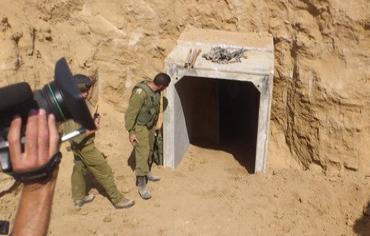
Writing in USA Today, Shira Rubin (“Israel Fears Tunnel War by Hamas,” Feb. 15, 2016) covers Israeli concerns about Hamas’ tunnel construction.
Rubin notes an Israeli military assessment that Hamas, the U.S.-designated terrorist group which rules the Gaza Strip, is employing 1,000 Gazan diggers to construct a large underground tunnel to sit atop smaller tunnel systems. The purpose of these tunnels is to kidnap and murder Israelis.
Some of the tunnels have electricity and telephone lines, but most do not. The underground passages, Rubin reports, give Hamas “a rare advantage against a vastly superior Israeli military.”
In 2006, the tunnels were used by Hamas to kill two Israeli Defense Force (IDF) soldiers and to kidnap a third, Gilad Shalit. Shalit was held captive for five years before he was released in exchange for 1,027 Palestinian prisoners.
USA Today quotes Betty Gavri, who lives on Kibbutz Nir Am, where residents can hear Hamas digging underneath them: “This conflict has reached a point where you’re fighting not another army but terrorism, which…makes all public spaces into a battlefield.”
By taking the time to note everyday Israeli concerns, Rubin reports an aspect of the Arab-Israeli conflict that many in the media too often miss. She details not only Hamas’ actions, but the group’s statements as well.
USA Today notes Jan. 29, 2016 statements by Hamas head Ismael Hanieyeh praising diggers killed in tunnel collapses as “heroes” and calling for more terror tunnel construction and “experimenting” with rockets aimed at the Jewish state. Although winter rains have caused some tunnels to collapse, Hamas nonetheless has boasted that it is only expanding construction.
A Lexis-Nexis search of other major U.S. print news media shows only USA Today detailed Hanieyeh’s exhortations.
The paper also reports IDF efforts to counter the tunnels.
Israel received a $120 million U.S. grant to develop an underground defense system that, Rubin says is “able to detect the digging of tunnels dozens of yards below ground.” This system “could represent a major military defeat for Hamas and a big psychological boost for Israelis.”
In addition to this high-tech effort, the IDF is using “considerable engineering and intelligence efforts” to locate and destroy the terror tunnels, according to Israeli military chief Lt. Gen. Gadi Eizenkot.
Yet, the danger to Israel is great. Rubin reports quotes Eado Hecht, a military researcher who testified during the 2015 U.N. commission investigating the 2014 Israel-Hamas war. “Israel’s only short-term option is to go into Gaza to destroy the tunnels, as was done in the 2014 war, which was enormously costly in terms of casualties and also politically,” Hecht said.
USA Today deserves recognition for shining a light on Hamas’ terror tunnels.
February 16, 2016
Palestinian University Honors Terrorist with ‘Cultural Event’

Al-Quds University in Jerusalem honored Palestinian terrorist Baha ‘Alyan on Feb. 13, 2016.
Middle East Media Research Institute (MEMRI), a non-profit organization that monitors Arab and Iranian media, reports that the university celebrated ‘Alyan, who along with Bilal Ghanem, shot and stabbed seven people on a Jerusalem bus on Oct. 13, 2015, killing three Israelis, including Richard Lakin, a dual American-Israeli citizen.
The “cultural event” took place at the university with the support of the Palestinian Authority (PA)’s High Commission for Youth and Sports, a branch of the Palestine Liberation Organization (PLO) tasked with coordinating youth and sports activities.
The terrorist was glorified by 2,500 students who sat side-by-side, forming a chain “of readers and writers” under the slogan “The Baha al-Shuhada Chain” (meaning “Light of the Martyrs chain”).
The event was promoted via a Facebook page and a special hashtag on social media to attract a following.
Muhammad ‘Alyan, the terrorist’s father, spoke during the event. He praised the students who attended as “continuing” in his son’s “footsteps” and stated, “the occupation has turned the entire Palestinian people into seekers of martyrdom.”
Another speaker, an Al Quds communications student named Muhammad al-Azraq, said the deceased terrorist proved that “defending the homeland required education.”
The event featured pictures of Baha ‘Alyan, t-shirts with his image and a box for students to put messages to ‘Alyan and other terrorists killed while attacking Israelis.
This is not the first time that Al-Quds University has hosted activities glorifying terrorists.
As a CAMERA Op-Ed has noted (“Omissions that distort the truth,” The Hill, May 28, 2015), the university has an Abu Jihad Museum that honors Khalil al-Wazir (aka Abu Jihad). Al-Wazir was responsible for murdering 124 Israelis, including 11 Israeli athletes at the 1972 Munich Olympic Games. A leader in the Palestine Liberation Organization (PLO), he also took part in the 1978 Coastal Road massacre that killed 38 civilians, including 11 schoolchildren. Al-Wazir, like ‘Alyan, also murdered U.S. citizens—the terrorist played a key role in the 1973 murder of two American diplomats in Sudan by a PLO contingent calling itself “Black September.”
Al-Quds University previously had a partnership with Brandeis University, the Massachusetts college named after American Zionist leader and U.S. Supreme Court Justice Louis Brandeis. From 1998 to 2013, the two were “sister institutions.” Brandeis ended the partnership after a Nazi-themed demonstration at Al-Quds by Islamic Jihad, a U.S.-listed terror group. As the Washington Free Beacon has reported, another U.S.-designated terror group, Hamas, has held rallies at the college (“Hamas Holds Military Rally at Al Quds University,” March 25, 2014).
Al-Quds University currently has a partnership with Bard College, a New York-based liberal arts school. The university also receives grants from European governments. According to Palestinian Media Watch, a non-profit that translates Arab media in the West Bank (Judea and Samaria), the Gaza Strip and eastern Jerusalem, in 2013 Al-Quds University received a donation of 3 million USD from the United Nations and European Union to “contribute to the development and protection of Palestinian cultural heritage in the old city of Jerusalem.” Other donors include UNICEF, the pontifical mission, the British consulate and French consulate, among others.
The French novelist Victor Hugo once remarked, “He who opens a school door, closes a prison.” But the author of Les Miserables and The Hunchback of Notre-Dame likely had a different definition from Al-Quds of what goes on behind a school door.
February 16, 2016
Washington Post Fails to Properly I.D. Terrorist ‘Charity’

Twice in the same week, The Washington Post has failed to fully identify a Turkish “charity” that has ties to terrorist groups.
A Feb. 12, 2016 Post article (“Turkey won’t open border to refugees”) on Ankara rejecting demands to open its borders to Syrian refugees, noted efforts by a “Turkish relief agency IHH, which has been shipping tents and meals across the [Syrian] border.”
Three days previously, an online article (“Merkel ‘horrified’ by Russian air attacks in Syria”) referred to IHH as a “nongovernmental Islamic charity group.” The Post quoted Burak Karacaoglu, the group’s spokesman, expressing concern over “opening the gates” to refugees. Karacaoglu said he was “concerned about the [Syrian] airstrikes, which are increasingly targeting civilian areas.”
Yet, The Post fails to mention that IHH is more than just a “nongovernmental Islamic charity group.” In fact, IHH has close ties to both the current Turkish regime and terrorist organizations.
According to a 2011 report by the Meir Amit Intelligence and Terrorism Information Center, an Israeli think tank that studies Islamic terrorism, “the Turkish IHH…has a record of supporting terrorist groups” and “has close relations with Turkey’s AKP government.”
In its Jan. 24, 2011 report on IHH, the center says that collaboration between IHH and ruling AKP (Justice and Development Party) party in Turkey is based on a “common Islamic worldview” and “the concept that IHH can be used as a tool to implement Turkish foreign policy.” According to the center, approximately one-quarter of senior IHH members have been appointed to government positions by the AKP.
The center reports:
“IHH has its roots in the conservative Islamic Mili Görüş movement, the parent of the Islamic Welfare Party which the AKP and the extremist Islamist Saadet party splintered from in 2001. Given its provenance, IHH is a clearly Islamist movement, which in the past was considered suspect and investigated by the Turkish authorities because of its involvement in providing support for Islamist groups (including those with ties to the global jihad) in combat zones such as Bosnia, Chechnya and Afghanistan. Ideologically IHH is or was originally based on the worldview of a central order of the Sufi tradition of Islam. The order, called Naqshbandiyya, has millions of adherents, including senior figures of the Turkish government.”
Cooperation between IHH and Turkey’s leaders was made plain in the Mavi Marmara flotilla incident.
As CAMERA has noted (“Radical, Pro-Hamas “Flotilla” Seeks Media Win,” May 31, 2010), IHH participated in—with the blessing of the Turkish government—a flotilla including armed activists sailing for the Gaza Strip under the guise of bringing aid to Palestinian Arabs. No aid was found aboard the lead ship, the Mavi Marmara, and video showed armed passengers attacking IDF forces who boarded the ship once it violated Israel’s blockade. The U.N. Palmer Report later upheld the blockade as legal.
The stated goal of flotilla organizers was to spark an international incident and use the confrontation over “humanitarian aid” to slander Israel. Passengers included members of the extremist group ISM (International Solidarity Movement) which supports violence against Israel, as well as sympathizers and financiers of Hamas, a U.S.-designated terror group.
The Meir Amit Intelligence and Terrorism Information Center reported that IHH in Germany has been designated a terrorist group and that the United States also has examined the possibility of making a similar designation due to the organization’s “past support for global jihad,” its involvement in the foiled terrorist attack on Los Angeles International Airport in 2000, its extremist anti-Western anti-Israeli Islamist character “and the support it gives Hamas, which is designated as a terrorist organization by the United States.”
For towing the Turkish government’s line and actively working for its frequently pro-Islamist, anti-Israel agenda, IHH has received awards from the AKP. In 2005 and 2007 it received awards from the Turkish vice prime minister’s office.
The Washington Post failed to report that IHH is much more than a “nongovernmental charity” or “relief agency.”
February 16, 2016
Who Did It? CNN Won’t Say
In a gross omission in an article Sunday about Palestinians opening fire on Israeli security forces near Damascus Gate, CNN fails to fulfill one of the basic journalistic requirements: to report who carried out the attack (“Israel says 2 men are dead after opening fire on police near Damascus Gate“).

It’s not only the headline which fails to note that the two attackers were Palestinian. Nowhere does the article itself identify the assailants as Palestinian, though that information had earlier been reported by other news services. The CNN story begins:
Two men who opened fire at Israeli security forces outside the Damascus Gate of Jerusalem’s Old City were shot and killed late Sunday, according to Israeli police spokesman Micky Rosenfeld.
No police or soldiers were injured.
Authorities have not yet identified the alleged attackers, referring to them only as “terrorists.”
According to the time stamp, the article was last updated at 22:20 GMT. Before then, news agencies had already identified the assailants as Palestinian.
For instance at 21:37 GMT, AFP reported (“Palestinians fire at Jerusalem police, attackers shot dead: police”):
Two Palestinians opened fire on Israeli police just outside Jerusalem’s old city walls before being shot dead by officers, police told AFP. (Emphasis added).
Similarly, the Associated Press reported at 22:00 GMT:
Late Sunday, two Palestinians were fatally shot after they opened fire with automatic weapons on Israeli security forces near Jerusalem’s Damascus Gate. (Emphasis added.)
CNN again covers up Palestinian violence at the end of the brief article by reporting:
Israel has experienced a spate of violence since October.
Specifically, Israel has experienced a spate of Palestinian violence since October, key information obscured by CNN.
This is not the first time in recent months that CNN has had trouble identifying Palestinian culprits or characterizing the last few months of Palestinian violence as Palestinian. See “CNN Dances Around Palestinian Violence, Refuses to Identify Culprits” for more details.
February 12, 2016
Poll: Majority in France Believe Jews Responsible for Antisemitism

Sixty percent of French citizens believe that Jews are at least partially responsible for rising antisemitism, according to a poll by Ipsos, a market research firm.
The survey, reported by The Jerusalem Post, is part of an 18-month study sponsored by the Fondation du judaisme francais (“Poll: Most Frenchmen believe Jews responsible for rise in anti-Semitism,” Feb. 2, 2016).
The poll also found that 56 percent of the country believe Jews have “a lot of power” and possess great wealth. Repeating another old antisemitic trope, 40 percent said Jews are “a little too present in the media.”
Thirteen percent of those surveyed said “there are a few too many Jews in France.”
For their part, many French Jews are expressing a growing interest in leaving the republic.
The Jerusalem Post notes another recent poll by the “Institut francais d’opinion publique, which pegged the number of French Jews mulling moving to Israel at 43 percent. Given France’s approximately 700,000 Jews, that translates to about 200,000.”
In 2015, nearly 8,000 French Jews made aliyah. By contrast, in 2013 less than 3,300 Jews moved to Israel. Figures from 2011, show only 1,900 French Jews immigrating to the Jewish State (“Au revoir and shalom: Jews leave France in record numbers,” CNN, Jan. 25, 2016).
Jews have increasingly come under attack in France.
On Jan. 9, 2015 four French Jews were murdered in Paris at a Jewish kosher deli by Islamic state sympathizers. In one week in June 2014, Jews were attacked in three different incidents in Paris, with the assailants using tear gas, axes and an electric taser (“Jewish teen wearing yarmulke tasered in Paris,” Tablet Magazine, June 11, 2014).
More recently, French Jews have been increasingly attacked in the city of Marseille. In January 2015, a fifteen-year old ethnic Kurd who supports the Islamic State terrorist group stabbed a Jewish school teacher, Benjamin Amsellem, nearly killing him. At his arraignment, the unnamed teenager said he was “ashamed” his attempt was unsuccessful (“Teen Jihadi ‘proud’ of attack on Jewish man in Marseille,” Times of Israel, Jan. 13 2016).
The Times of Israel reports that the attack was the third in as many months in the French city. “France’s Jewish community has grown used to living under the surveillance of armed soldiers around synagogues and schools,” the paper says.
As CAMERA has noted, antisemitism has been rapidly growing in Europe—anti-Jewish violence up forty percent in 2014, according to a study by Tel Aviv University. The majority of these attacks were in western Europe (“Violent antisemitic attacks up 40 percent—Where’s the Coverage?” April 21, 2015).
With the current trend of antisemitic violence in France—and a majority of the public willing to blame the victim—it may come as little surprise if French immigration to Israel increases in 2016.
February 9, 2016
Zionism is “Threat to Democracy” according to Haaretz

In a recent article in Haaretz, contributor Revital Madar states that, “The threat to democracy in Israel, from 1948 to the present, is rooted in Zionism.” Madar claims that the there are insidious bodies at work at the core of Israel’s political and ideological character whose goal is to destroy human rights, “impose collective punishment,” and govern by stringent religious doctrine. These accusations ignore the obvious facts to the contrary, namely Israel’s democratic elections, judicial system, and non-discriminatory character.
Responding to the condemnation of Joint Arab List Members of Knesset (MKs) for visiting the families of Palestinian terrorists, the author takes the position that the Joint List is the “only” Knesset party in Israel that “truly understands what democracy is.” Madar writes that the condemnation the Joint List MKs have faced in the aftermath of their visiting the families of Palestinian terrorists is a desecration of free speech and a violation of democratic rights. The Joint List ministers who observed moments of silence together with the relatives of terrorists in memory of the dead attackers are lauded for having a sensitivity that Israel as a nation lacks and cannot understand; unlike the rest of Israel, these MKs can “care more for a person who committed a crime…and for the rights of his family.”
One of the MKs being celebrated by Haaretz for her humane, fair, and balanced views is Hanin Zoabi, who has voiced anti-Israel views on numerous occasions. She has stated that she is against a two-state solution, believes Israel should work with Hamas as a partner in peace, and has exited the Knesset during the recitation of the national anthem saying, “Hatikvah does not represent me.” After the 2014 kidnapping and murder of three Jewish boys, Zoabi refused to recognize the kidnappers as terrorists, and rationalized the attack as the desperate actions of oppressed teens.
The Haaretz article falsely claims that Israel has a doctrine “to differentiate between human beings,” failing to characterize Israel as it exists in reality, a free and democratic nation: Tel Aviv is continuously listed among the most popular gay cities in the world, known for its massive annual Gay Pride Parade; Israeli Arabs enjoy the richest opportunities, educational and professional, of any Arabs in the region; women in Israel are treated with respect unparalleled in the Middle East and afforded equal rights under the law; and freedom of speech and political thought are afforded to all. In fact, it is these very freedoms that Joint List MKs exercise in celebrating terrorists and that Madar enjoys in criticizing the Jewish state.
– Rachel Frommer, CAMERA intern
February 9, 2016
Where’s the Coverage? Palestinian Official Calls to ‘Intensify and Develop’ Anti-Israel Violence

Referring to Palestinian Arab terror attacks against Israelis, Fayez Abu Aita, a spokesman for the Fatah movement that controls the Palestinian Authority (PA), has called to “intensify and develop this popular uprising.” Despite frequently quoting him in his role as a Fatah spokesman, major U.S. print news outlets have failed to report these comments.
According to the Middle East Media Research Institute (MEMRI), a non-profit organization that translates Arab and Iranian media, Aita’s comments were made on official PA TV on Jan. 21, 2016.
Aita also claimed that the “popular uprising” [a series of stabbing, shooting, vehicular and other attacks since September 2015] is “growing today. It has moral and material support from the Palestinian leadership and from the Fatah movement, so that it will be able to continue.”
The Fatah official did not seem to notice the potential contradiction of calling the anti-Jewish violence a “popular uprising” that also has “moral and material support” from PA and Fatah leadership.
Seeming to support Aita’s contention that the PA supports the continuing terror attacks: On Feb. 3, 2016, PA President Mahmoud Abbas met with the parents of several young Palestinian Arabs who were killed by Israeli security forces while murdering Jews. Abbas did so only hours after three Palestinian Arabs murdered nineteen-year old Border Police officer, Hadar Cohen (“Abbas Signals Solidarity with Terrorism,” The Times of Israel, Feb. 16, 2016).
Despite acknowledging PA support for terror attacks, Aita blamed Israelis for the violence.
Alluding to U.S. and Israeli-led negotiations with PA leaders for a “two-state solution” in return for peace with and recognition of the Jewish state, the Fatah official said, “Palestinian leaders suffered in those negotiations like Job suffered. All the smart-asses say that 20 years have passed and the negotiations have failed. We have suffered like Job, and we are not going for this popular uprising just for fun.”
What Aita did not mention was that Palestinian leaders prolonged either their “suffering,” the negotiations or both by rejecting statehood in exchange for peace with Israel in 2000, 2001 and 2008, among other instances.
Instead, the Fatah spokesman asserted:“As far as we [the PA and Fatah] are concerned, it [the “stabbing intifada”] will gradually escalate. It plays an extremely significant role at this state, but it could develop into an intifada throughout our homeland. It depends on how much Israel succumbs to the will of the international community, and to the Palestinian people’s right to end the occupation, to self-determination, and to the establishment of the Palestinian state, with Jerusalem as its capital.”
As Fatah’s spokesman, Aita is regularly quoted by news media (see, for example, “Hamas Suspends Voter Registration Process in Gaza,” The New York Times, July 2, 2012). Yet, despite treatment of him as a go-to source, Aita’s recent admission of Palestinian leadership supporting anti-Israeli terror attacks was not mentioned by a single major U.S. print news outlet.
Where’s the coverage?
February 8, 2016
Public Speech Without Accountability at Vassar

Vassar, which has become a hotbed of anti-Zionist intimidation, charges a pretty hefty sum for a year’s tuition and room and board.(Screenshot from the school’s website.)Jasbir Puar, an associate professor at Rutgers University, recently appeared at Vassar College in Poughkeepsie, New York. During her Feb. 3 talk, she made a number of outlandish accusations that were recounted by Professor William A. Jacobson at his website, Legal Insurrection. Jacobson reported that “Puar’s appearance amounted to an anti-Israel propaganda event at which Israel was portrayed in a manner reminiscent of ancient blood libels. A major theme of the talk was that Israel treats Palestinians as part of a type of scientific experiment developed to ‘stunt’ Palestinian bodies.”
For example, Puar suggested that Israel has refused to release the bodies of young Palestinians who were killed in the aftermath of numerous attacks over the past few months because the Jewish state has harvested organs from the corpses.
In fact, Israel has delayed the return of the bodies of Palestinian attackers to prevent their use as propaganda props by the Palestinian Authority and terror organizations in the West Bank. Palestinian leaders use the funerals of the attackers to incite more violence against Israelis. The Associated Press reported on January 5, 2016 that “At the outset of the violence, Israel’s public security minister, Gilad Erdan, recommended holding on to the bodies of Palestinian assailants, claiming the funerals turn into ‘an exhibition of support for terror and incitement to murder.’”
According to Jacobson, the conclusion of her speech went as follows:
(more…)February 3, 2016
DEA Uncovers Hezbollah Drug and Money Laundering

The United States Drug Enforcement Administration (DEA) announced that it arrested top leaders of a European cell of Hezbollah, a U.S.-designated terror group, according to a Feb. 1, 2016 press release. Hezbollah, the Lebanese Shi’ite “Party of God,” is an Iranian surrogate with reported worldwide reach.
The DEA said the arrests targeted members of Hezbollah’s External Security Organization Business Affairs Component (BAC), “which is involved in international criminal activities such as drug trafficking and drug proceed money laundering.” Profits made in these illicit efforts are used to buy weapons.
The arrests were made as part of DEA’s Project Cassandra, an effort to clamp down on the BAC, which traffics cocaine in the United States and Europe. “The most significant arrest” according to the agency, was that of Mohamed Noureddine, a Lebanese money launderer who used his Lebanon-based company, Trade Point International S.A.R.L to launder Hezbollah funds. Noureddine has “direct ties” to Hezbollah elements in both Lebanon and Iraq.
Over the past year, U.S. Department of Justice investigations into Hezbollah financing have resulted in the indictments of individuals living in Columbia, Lithuania, France and the United States.
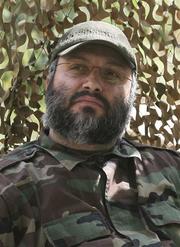
The BAC was founded by Hezbollah international operations head Imad Mughniyah. Mughniyah, reportedly behind the 1983 bombing of the U.S. Marine Corps barracks in Beirut, among many other attacks, was killed in Damascus, Syria on Feb. 12, 2008 reportedly in a joint U.S.-Israel operation conducted by the Central Intelligence Agency (CIA) and its Israeli equivalent, the Mossad. The Hezbollah component is currently overseen by Abdallah Safieddine.
According to DEA, its investigation began with a look into the Lebanese Canadian Bank. Working with authorities in France, Belgium, Germany and Italy, the agency “uncovered an intricate network of money couriers who collect and transport millions of euros in drug proceeds from Europe to the Middle East. The currency is then paid in Columbia to drug traffickers.” The DEA notes that a “large portion” of the profits go through Lebanon and a “significant percentage” benefit terrorist organizations, particularly Hezbollah.
The U.S. Department of Treasury announced on January 28 that sanctions have been placed on more than 100 people and entities associated with the terrorist group (“U.S. Puts Sanctions on Alleged Hezbollah Money Launderers,” The Wall Street Journal, January 28).
Writing for The Wall Street Journal’s online Think Tank blog, analyst Matthew Levitt, says that Hezbollah is “facing hard times” as a result of the group’s intervention in the Syrian civil war, a decline in oil prices that have “led Iran to cut back support” and sanctions (“The Crackdown on Hezbollah’s Financing Network,” January 27). Levitt is a former Treasury Department deputy assistant secretary who has written extensively about Hezbollah and sanctions, and is currently the director of the Stein Program on Counterterrorism and Intelligence at the D.C.-based think tank, Washington Institute for Near East Policy.
Levitt notes that sanctions have targeted foreign companies that supply material for unmanned aerial vehicles (UAV’s) Hezbollah uses in Syria and Israel. The analyst says investigations into Hezbollah’s financing have “led to the inner circle” of the group’s leadership and are increasingly putting pressure on Hezbollah leader Hassan Nasrallah.
Hezbollah has long denied that it engages in drug trafficking and money laundering. In 2011, responding to a criminal complaint in a New York federal court, the organization claimed: “The United States’ allegations that Hezbollah is funding its activities illegitimately is merely another attempt to tarnish the image of the resistance…Hezbollah categorically denies the false charges of its direct or indirect involvement in money laundering, drug trafficking or illegal banking operations.”
But then, Hezbollah also has denied targeting Israeli civilians in terrorist attacks throughout the world and starving the Syrian town of Madaya via siege on behalf of Syrian dictator Bashar al-Assad—actions it has taken. From lies to murder, the group is nothing if not consistent.
February 2, 2016
Defense One: Israel Is a Rising Cyber ‘Super Power’

Israel is a rapidly growing power in cybersecurity. An article in Defense One, a publication that focuses on military and international affairs, details Israel’s expanding cyber power (“The Middle East’s Quietly Rising Cyber Super Power,” Jan. 27, 2016).
Author Adam Segal, a senior fellow at the New York City-based think tank Council on Foreign Relations (CFR), describes Israel as having “an ambitious domestic and international agenda designed to make it one of the world’s super cyber powers.” Segal’s focus at CFR, where he runs a blog called Net Politics, is on cybersecurity and cyberconflict.
Israel currently has more than 300 cybersecurity companies and accounts for 20 percent of the world’s private investment in cyber. The Jewish state currently exports $6 billion in cybersecurity technology.
Segal attended the January Cybertech 2016 in Tel Aviv, at which Israeli Prime Minister Benjamin Netanyahu spoke about Israeli cybersecurity and its future. Delegations from the International Monetary Fund, U.S. Department of Homeland Security and business and banking officials from Canada and Japan, among other countries attended the conference. The Jerusalem Post called Cybertech 2016 “the largest exhibition of cyber technologies outside the United States (“Israel’s electrical grid attacked in massive cyber attack,” January 26).”
In his conference speech, Netanyahu highlighted the February 2015 establishment of an Israeli National Cyber Authority as part of a comprehensive plan to boost Israel’s cyber readiness. The authority is tasked with ensuring a comprehensive response against cyber-attacks and “strengthening the resilience of organizations and sectors in the economy,” according to a press release by the prime minister’s office. Netanyahu also hinted at bureaucratic turf battles between the Shin Bet, Israel’s domestic security agency, and the authority over cybersecurity responsibilities—a conflict that Segal called an “entirely predictable outcome of bureaucratic politics” that is expected to be “resolved quickly.”
Netanyahu, Segal reported, also evidenced skepticism towards “the idea of a universal code of cyber norms. Instead, he advocated a meeting of like-minded countries to define norms and sanctions against those who violate those standards.”
The Israeli prime minister said the Israeli government is expected to release soon guidance on export control laws for cybersecurity products.
On January 26, the day before the Cybertech Conference, Israel’s electrical grid was the target of a massive cyberattack. Speaking about the incident at the conference, Israeli Minister of Infrastructure, Energy and Water, Yuval Steinitz said, “the virus was identified and software was activated to neutralize it.” The perpetrators of the attack have not been named.
Steinitz added: “This is a fresh example of what we need to be prepared to face at any time.”
As Defense One noted, Israel appears to be taking such preparation seriously.



Search:
Search this site: