
A Letter-Writer Taps Into NPR Bias
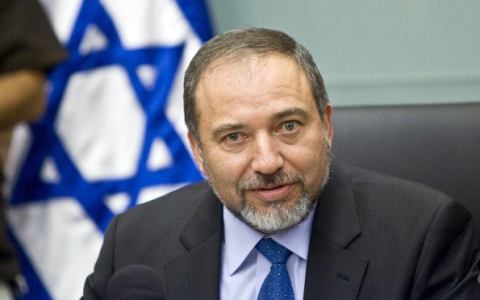
A concerned NPR listener, D.L., wrote the following to Morning Edition yesterday after hearing a segment on Israeli politics:
Dear Morning Edition,
Today’s edition (Thursday May 26) contained yet another appallingly biased, strident, context free, anti-Israel report, taking the form of an interview between Renee Montagne and Emily Harris.
We were told that Lieberman’s appointment “casts doubt on a two state solution”; that this is the most rightwing government in Israel’s history; that the State Department expressed concern about the direction in which Israel is moving”. We were told about Lieberman calling for a loyalty oath, and heads to be “chopped off” Israeli Arabs “who are not with us”, that there are no negotiations, … Of course Montagne and Harris used the words “hardline”, “extreme” to describe Israeli leaders, never to Palestinians.
Of course, exactly the same things were said by NPR when Begin and Sharon and others came into power. Israel can do no right (except when it is making one-sided concessions of a type the US would never itself make) and the Palestinians can do no wrong.
There was not a stitch of context in this report, and the one soundbyte about tough leaders making changes did not balance the appalling bias.
How long will it take Emily Harris and NPR to point out that every Palestinian leader has explicitly rejected the notion of two states for two peoples, and repeatedly rejected ever accepting Israel as a Jewish state, behind any boundaries? And that Abbas has made it clear that a Palestinian state in the West Bank will not end the conflict, but be used as a springboard for further attacks? And that there has never been a Palestinian leader who has accepted a permanent two state solution, nor a permanent Israel behind any boundaries? And that Palestinian attitudes and leadership make a two state solution a drawing board idea?
How long will it take Emily Harris and NPR to point that it is Mahmoud Abbas who has repeatedly refused direct negotiations, while Netanyahu has offered them at any time? And that Abbas is seeking unilateral statehood without peace? How long will it take you to call Abbas and Saeb Erekat etc, “hardline”, “extreme”, because compared to them, Israeli leaders including even Lieberman, look like doves?
How long will it take Emily Harris and NPR to mention the incessant, virulent, racist, statements coming from all Palestinian leaders, including Mahmoud Abbas? Why do they get such a free pass when there is such a hostile focus and negative spotlight on anything said by Israel’s leaders? It is Mahmoud Abbas who said that Jews’ filthy feet desecrate the Temple Mount, who calls for days of rage, describes murderers as martyrs, who denied any Jewish connection to Jerusalem or the Holy Land, whose Palestinian Authority continues to celebrate and glorify terrorist attacks, and name youth camps, town squares, soccer tournaments after people like Dalal Mugrabi whose only act was to kill over 30 Israeli civilians in a bus attack.
How long will it take to recall that every Israel handover of land has led not to peace nor negotiations, but to more attacks and further calls for lawfare and warfare against Israel?
How long will it take to point out that core issue in the conflict remains Palestinian and broader Arab refusal to accept a permanent Israel behind any boundaries?
Shame on NPR for its unceasing anti-Israel bias.
He has a point, even if the concerns he flagged are likely to have been missed by the average listener. You can listen to the segment, entitled “Here’s Why Israel’s New Defense Minister Is So Controversial,” here:
On a morning commute, this might sound no more nefarious than any other analysis of politics and its potential implications. But the writer picked up on how the segment fits in the broader context of NPR reporting.
Maybe if NPR regularly scrutinized Palestinian politics, parties, and politicians as it does when Israel is under the microscope, there would be little to say. But as the letter writer noted, that doesn’t happen so frequently, especially when it comes to Palestinian Authority president Mahmoud Abbas and others in his Fatah party.
Case in point: Over the past five years, according to the Nexis news database, nine NPR programs used some form of the descriptor “hard-line” in reference to past, present, and future Israeli governments or politicians or movements. Another one addressed both sides with a reference to “hardliners among Israelis and Palestinians.” It was used to describe Palestinians only twice. Both times it was in reference to Hamas, meaning policies and politicians related to the Palestinian Authority and the Fatah party that dominates it apparently haven’t been cast by NPR as hardliners even once.
(This is not for lack of hardline attitudes. Palestinian Authority president Mahmoud Abbas, who heads the Fatah party, has in the past dabbled in Holocaust revisionism, and more recently has rebuffed peace offers, rejected the legitimacy of the Jewish state, and allowed his party’s media to routinely broadcast anti-Israel incitement — for example, the extolling terrorists who murdered men, women and children as heroes. Palestinian Authority preachers on Palestinian Authority television call on god to “punish the wicked Jews.” And so on.)
That numerical breakdown, of course, is more a glimpse than a study. “Hard line” is only one of many ways to indicate extremism or intransigence. But the lopsided use of the phrase does capture the sense many NPR listeners have: That the Israeli is subject to a level of scrutiny and suspicion the Palestinian Authority and its players are largely exempt from. That hard-line currents in Palestinian society are not viewed as being so important — or so hard-line. And that, as a result, the broadcaster cultivates an image of a wart-covered Israel juxtaposed with a more pure Palestinian movement. The segment criticized by D.L. above may not in a vacuum give the impression of glaring bias. But it is part of a larger, and distorted, picture.


More from SNAPSHOTS
Mahmoud Abbas’ Diatribe Threatening Israel Included Bogus Canaanite Claim
September 10, 2019
Palestinian Authority President Mahmoud Abbas’ recent anti-Israel diatribe that aired on PA TV was monitored and translated by Palestinian Media Watch (PMW). Excerpt: "I say to [Israel]: Every stone you have built on our land [...]
CNN Calls House’s Unifying Anti-BDS Vote ‘Divisive’
July 24, 2019
Yesterday, in an overwhelming vote of bipartisan support, the House of Representatives voted 398 to 17 to adopt a resolution opposing the anti-Israel BDS (boycott, divest, sanctions) campaign. Yet, CNN's headline casts the unifying vote [...]
NY Times Cites Poll, Hides Palestinian Support for Violence
July 9, 2019
The New York Times has struggled to accurately describe polls this year. In January, editor Jonathan Weisman misrepresented Pew polling data to describe a nonexistent surge in Israeli support for the United States under President [...]
CNN’s Zakaria Indulges Palestinian Propagandist Hanan Ashrawi
June 9, 2019
Fareed Zakaria’s weekly Cable News Network (CNN) program (grandiosely named “Global Public Square”) June 9 broadcast included a discussion of the current U.S. Middle East peace plan with guests Hanan Ashrawi (Palestinian Authority official) and [...]
In Robert Bernstein Obit, AFP Inappropriately References His Judaism
May 29, 2019
Robert Bernstein (Courtesy the New Press) In its obituary yesterday for American publisher Robert Bernstein, Agence France Presse inserted an inappropriate reference to the Human Rights Watch founder who later turned on the organization due [...]