
Where’s the Coverage? Egyptian Army Destroys Sinai Homes
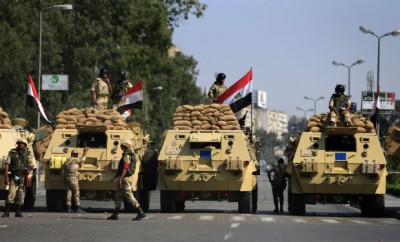
In a widely underreported move, the Egyptian Army began demolishing the homes of civilians in the city of Rafah on Oct. 4, 2017. The move, an Al-Monitor report noted, was “part of the third stage of building a border buffer zone with the Gaza Strip (“Egypt’s army destroys Sinai homes to expand Gaza buffer,” Oct. 11, 2017).”
The buffer line, the dispatch stated, is part of an attempt to destroy tunnels used by terrorist groups, such as Hamas, to smuggle operatives and materials between Gaza and the Sinai Peninsula. The process has been ongoing since October 2014. In its third phase, as with the preceding two, an area of 500 meters was added.
Al-Monitor claimed to have received a copy of the press statement of the governor of northern Sinai, Abdel Fattah Harhoor. Among other things, it said that the third phase of the buffer zones development was essential to “protecting Egypt’s national security and countering terrorism,” Al-Monitor said.
Those residents who have been displaced as a result of its construction are “facing difficulties in finding alternative housing,” the paper reported. The publication added:
“Hundreds have resorted to building huts from the remains of houses and palm trees in desert areas in the surroundings of Sheikh Zuweid, Rafah and el-Arish. But their presence in these areas puts their lives at risk because there has been constant military combing and launching of random missiles between the army and the Egyptian branch of the Islamic State, Wilayat Sinai, since 2013.”
During the first phase of the buffer zone’s construction, displaced residents were offered compensation by the Egyptian government. At present, it’s unknown if compensation of any form will be offered to those forcibly relocated during the ongoing third phase.
Egypt’s decision to construct the buffer zone has been widely ignored by many major Western news outlets. A Lexis-Nexis search of major U.S. news outlets, such as The Washington Post, USA Today and The Baltimore Sun, among others, shows no mention of the recent phase and its accompanying displacement of Egyptian residents due to security concerns.
By contrast, as CAMERA has highlighted, Israeli security measures, such as the security barrier, are both well covered and frequently misreported (see here for examples and CAMERA-prompted corrections).


More from SNAPSHOTS
CNN’s Amanpour Condemns “power grab” By Israel’s Prime Minister and Others
April 1, 2020
We’ve said it often, but it’s worth repeating: Anyone interested in reasonably unbiased information about Israel (at least) should avoid the broadcasts of CNN’s Chief International Correspondent and Anchor, Christiane Amanpour. In characterizing responses to [...]
Seattle Media Oblivious To Imam’s Hateful Indoctrination Condemning Jews
January 7, 2020
The Masjid Ar-Rahmah mosque teaching – that Allah transformed Jews into apes and pigs for disobeying him – delivered by Imam (prayer leader) Mohamad Joban – was posted online by mosque personnel. This December 2019 [...]
AP Distorts: Bethlehem ‘Almost Completely Surrounded’
December 10, 2019
Over two years after improving inaccurate language falsely citing Israel's security "barrier surrounding the biblical city" of Bethlehem, the Associated Press once again misrepresents. AP's Joseph Krauss and Mohammad Daraghmeh wrote yesterday ("Palestinians in Bethlehem [...]
Reuters Errs on Administrative Detention For ‘Anti-Israel Activity’
November 5, 2019
The Ofer Prison, near Ramallah (Photo by Tamar Sternthal) A Reuters article today egregiously misrepresents administrative detention, erroneously asserting that it is mainly applied to "Palestinians suspected of anti-Israeli activities," when in fact the Israeli [...]