
Recent Entries:
Month: September 2016
September 12, 2016
Rarely Highlighted in the Mainstream Media are Genuine Palestinian Peace-Seekers

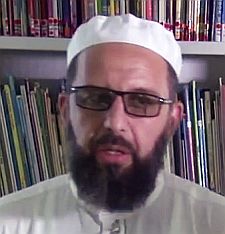
Sheikh Abdullah Tamimi One topic that is rarely covered in the mainstream media are attempts by genuine Palestinian peace-seekers to find a solution to the Arab-Israeli conflict. Unlike PA leader Mahmoud Abbas, who is usually the one the media touts as a peaceful, moderate Palestinian leader, these Palestinians do not believe in nurturing a culture of grievance and victimology, do not believe in boycotting Israel, and do not believe that incitement against Israel and Jews is the answer.
Arab journalist Khaled Abu Toameh highlights Sheikh Abdullah Tamimi, one such Palestinian peace-seeker, in an article for the Gatestone Institute. He points out that:
Tamimi and his colleagues do not believe in boycotts and divestment. They are convinced that real peace can be achieved through dialogue between Palestinians and all Israelis — not just those who are affiliated with the left-wing. The Israeli left-wing, they contend, does not have a monopoly over peace-making.
For Tamimi, real peace begins between the people and through economic cooperation and improving the living conditions of the Palestinians. This, he explains, is more important than the talk about the establishment of a Palestinian state, which he believes, under the current circumstances, is not a realistic option.
Unfortunately, Tamimi — “who hails from an influential clan in Hebron”– has been disowned by his clan. Still, according to Abu Toameh:
Tamimi’s is not a lone voice in the desert. He represents an increasing number of Palestinians who have lost confidence in their leaders’ ability to improve their living conditions and achieve peace and stability in the region. These Palestinians support the idea of “economic peace” between the two peoples — a notion that goes against the ideas of the advocates of “anti-normalization” and others in the West obviously acting against the true interests of the Palestinians by promoting boycott, divestment and sanctions (BDS) against Israel.
Read about the honest and courageous cleric here.
September 11, 2016
Biased Reuters, AFP Captions on Disputed Gaza Death
UPDATE, 5 pm EST: AFP, Reuters Add IDF’s Account to Captions on Disputed Gaza Death
Both Reuters and Agence France Presse, major photo services with thousands of clients across the world, published incomplete, tendentious captions Friday concerning a Gaza teen killed under disputed circumstances. While Palestinian sources claim that Israeli troops shot 18-year-old Abdel-Rahman Al-Dabbagh in the head during a border clash, the Israeli army said that it only used tear gas. As a Reuters new story accurately reported:
An 18-year-old Palestinian was killed during a rock-throwing protest near the Gaza-Israel border on Friday and a Palestinian health official said Israeli soldiers shot him, but the Israeli army said troops were not responsible.
Gaza health ministry spokesman Ashraf Al-Qidra said Abdel-Rahman Al-Dabbagh was killed by an Israeli bullet to the head during the border clash in the central Gaza Strip.
The Israeli military said troops had sought to contain the violence on the other side of the border fence and had used only tear gas.
“Dozens of rioters breached the buffer zone and attempted to damage the security (border) fence. … Forces stationed at the border used tear gas that led to the dispersal of the riot. Following a preliminary review, the Israel Defense Forces did not conduct the reported shooting,” a military statement said.
Nevertheless, in violation of Reuters’ policy to “take no sides, tell all sides,” Reuters’ captions about the incident completely ignore the information from the Israeli side. Reuters’ handbook further advises journalists:
Our text and visual stories need to reflect all sides, not just one. . . . We have a duty of fairness to give the subjects of such stories the opportunity to put their side.
Examples of Reuters’ one-sided captions, which left out the Israeli information, follows:

A man mourns the death of Palestinian youth Abdulrahman Al-Dabag, who medics said was shot dead by Israeli troops on Friday, at a hospital in the central Gaza Strip September 9, 2016. REUTERS/Ibraheem Abu Mustafa

A man mourns the death of Palestinian youth Abdulrahman Al-Dabag, who medics said was shot dead by Israeli troops on Friday, at a hospital in the central Gaza Strip September 9, 2016. REUTERS/Ibraheem Abu Mustafa
(more…)September 11, 2016
More BDS Falsehoods in The Toronto Star

Linda McQuiag claims BDS success, ignoring massive increase in foreign investments during last decade since the launch of the campaign The anti-Israel BDS movement (boycott, movement and divest) campaign has long used misinformation to garner support. It’s a shame that Canadian journalist Linda McQuaig follows suit (“Elizabeth May shouldn’t run away from BDS: McQuaig,” Aug. 22).
The Toronto Star should have learned from its 2013 experience, when CAMERA prompted corrections of false BDS claims that Meg Ryan and Bruce Willis heeded boycott calls and refused to perform in Israel.
Writing last month in The Toronto Star, McQuaig argued that BDS is successful, noting a “2014 UN report [which] found that foreign investment in Israel had dropped by almost half from the previous year, partly because of the campaign.” She ignores, though, the United Nation’s latest figures, which reflect an increase in direct foreign investment in Israel of over 70 percent in 2015 compared to the previous year.
Moreover, according to Bloomberg (“The Boycott Israel Movement May be Failing,” June 2016), “Foreign investments in Israeli assets hit a record high last year of $285.12 billion, a near-tripling from 2005 when the so-called Boycott, Divestment and Sanctions movement (BDS) was started.” The 2014 decline coincided with the summer 2014 war between Hamas and Israel. Given the overall growth in the last decade since the launch of BDS, the 2014 downturn cannot logically be attributed as a BDS success.
In another deception, McQuaig quotes Desmond Tutu alleging “racially segregated roads” in the Palestinian territories, echoing the bogus canard that there are “Jewish-only roads” in the West Bank, a falsehood about which CAMERA has prompted correction in numerous media outlets.
Finally, McQuaig misleads with her grossly inaccurate characterization of Israel’s occupation of the Gaza Strip. She erred, referring to “the fact that millions of Palestinians have been living under military occupation in the West Bank and Gaza for almost 50 years, with Israel effectively annexing their land.” (Emphasis added.)
Her errors are three-fold: Israel’s 38-year occupation of the Gaza Strip is not “nearly 50 years old.” Nor, contrary to her assertion, are Gazans still living under Israeli occupation. Nor did Israel “effectively annex” the Gaza Strip.
Israel’s occupation of the Gaza Strip (formerly under Egyptian sovereignty) lasted from 1967 until 2005, when Israel pulled out every last soldier and civilian (alive and deceased, even uprooting graves) from the Gaza Strip. Far from “effectively annexing” the Gaza Strip, Israel has fully withdrawn. Hamas, listed as a terror organization by Canada, the United States, and the EU, governs the territory.
CAMERA has contacted editors on the last point to request a correction. Stay tuned for an update.
September 8, 2016
UCC Peacemakers Promote Antisemitic Organization

A so-called “peacemaking” document produced for worship leaders in the United Church of Christ promotes the work of If Americans Knew, an organization led by Alison Weir, who has been condemned by both the Anti-Defamation League and Jewish Voice for Peace. (Screenshot.) There are a lot of problems with a recent “peacemaking” document produced by the United Church of Christ “peace” activists, but one problem stands out like a sore thumb — it highlights the work of “If Americans Knew” an organization that has been denounced by the far-left group Jewish Voice for Peace (JVP).
The document is produced by the United Church of Christ Palestine Israel Network (UCC PIN), which is affiliated with the Massachusetts Conference of the United Church of Christ. (The Massachusetts Conference processes donations to the UCC PIN.) Titled “Promoting a Just Peace in Palestine-Israel: A Guide for United Church of Christ Faith Leaders,” the text purports to educate UCC pastors about the Arab-Israeli conflict.
Predictably, the document omits crucial information that reasonable people would need to know about the Arab-Israeli conflict before expressing an opinion about it. For example, the text describes Israel as having “conducted full-scale bombardments of Gaza in 2008, 2012 and 2014” without even mentioning the rocket attacks that preceded these wars.
Moreover, the word “Hamas” appears nowhere in the text, which is so indifferent to violence against Israel that it seems as if it is produced with the intent of sparking outrage on the part of American Jews and their leaders.
(more…)September 8, 2016
NYT’s Peter Baker: Word Choices and Attitudes

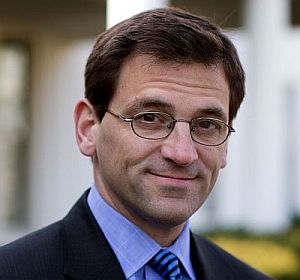
NYT Jerusalem Bureau Chief Peter Baker Following Peter Baker’s debut as the New York Times Jerusalem bureau chief, CAMERA noted that his first article was disappointing to readers looking for informative and balanced pieces from the region.
His article in today’s print edition of the Times is about Soviet documents that indicate Palestinian President Mahmoud Abbas was once a KGB agent in Damascus, known as “Krotov,” meaning ‘the mole”. Informative and interesting, but Baker injects a note of unjournalistic snarkiness directed at Israel as he introduces the story:
The possibility [of Abbas’ role as a KGB agent], trumpeted by the Israeli media on Wednesday night and just as quickly dismissed by Palestinian officials, emerged from a document in a British archive listing Soviet agents from 1983.[emphasis added]
When does reporting a story become “trumpeting”? And what does this word choice imply, if anything, about Baker’s attitude toward his subject matter?
September 6, 2016
New York Times Covers Anti-Coptic Violence Admirably

Rod Nordland speaking at the National Press Club earlier this year. (YouTube screenshot.) The New York Times offered its readers some excellent reporting about anti-Christian violence in Egypt. In a piece by Rod Nordland published on Sept. 4, 2016, the Times recounts the ongoing violence against Coptic Christians in Egypt and details the varying responses that this violence elicits from different parts of the Coptic Orthodox Church.
The article, titled “Egypt’s Christians Say They Are at a ‘Breaking Point’” also provides details about how the Sisi regime in Egypt is trying to manage the public relations crisis anti-Christian violence presents to the government.
The article opens with a quote from Imam Mahmoud Gomaa, a Muslim cleric who has been appointed to “keep the peace” in upper Egypt, the scene of regular acts of anti-Christian violence perpetrated by mobs of angry Muslims. “Everything is good,” he said.
Then, Nordland reports about how Bishop Makarios said “just a few hours later” that he has “nothing to do with Mahmoud Gomaa.” It’s a brutal counterpoint to of Gomaa’s dissembling.
The stark difference in viewpoints between Gomaa and Makarios sets the tone for the rest of the article, which reports that Christians in upper Egypt have “suffered violence and humiliation at the hands of local mobs. “Houses have been burned, Copts attacked on the streets and hate graffiti written on the walls of some churches,” Nordland reports adding that “the turning point came in May when an older Christian woman was stripped naked by a mob…”
A few paragraphs later, Nordland returns to Imam Gomaa. “’No one has been killed,” the imam reports. “No one has been wounded. There’s no conflict. The problem is really with the journalists writing about it.”
(more…)September 5, 2016
AFP Misleads Again, This Time About World Vision

In an article today about doubts in Gaza regarding Israel’s case against World Vision‘s Mohammed al-Halabi, charged with diverting tens of millions of dollars in aide to Hamas, Agence France Presse claims (“Gazans, NGO question Israeli charges against aid worker”):
The German and Australian governments, as donors, have additional mechanisms including external audits and they have found no major concerns.
Both the German and Australian governments have suspended their aid to World Vision, a rather unusual response for those who have allegedly cleared the aid organization of significant wrongdoing. While AFP itself noted on Aug. 11 that “Germany and Australia have suspended aid to World Vision,” today’s story completely omits this fact, leaving readers with the impression that Germany and Australia have cleared the organization.
CAMERA was not able to independently verify the claim that the two governments carried out audits which revealed no significant wrongdoing on the part of World Vision. CAMERA has requested that AFP either substantiate the claim, or correct. In addition, the fact that Germany and Australia cut off aid to World Vision should be added to the story.
In a separate AFP article today (“Jerusalem police kill Palestinian would-be attacker“), the influential wire agency deviates from its standard formulation regarding Palestinian fatalities. Today’s article omits the key point that the majority of those Palestinians killed were carrying out attacks against Israelis. The incomplete passage is:
Violence has surged in the Palestinian Territories and Israel since October 2015, costing the lives of 223 Palestinians, 34 Israelis, two Americans and one Eritrean and Sudanese respectively, according to a tally by AFP.
This article omits the following critical information which appears in other AFP articles:
Most of the Palestinians killed were carrying out knife, gun or car-ramming attacks, according to Israeli authorities.
CAMERA has contacted editors to request that they add this key information.
See also from today: “AFP Misleads on Gaza ‘Food Shortages’“
September 5, 2016
AFP Misleads on Gaza ‘Food Shortages’
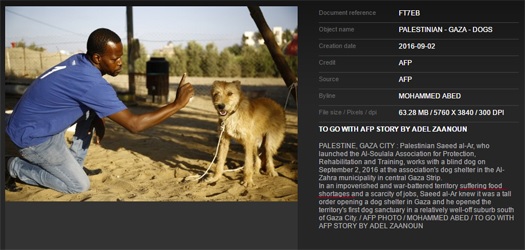
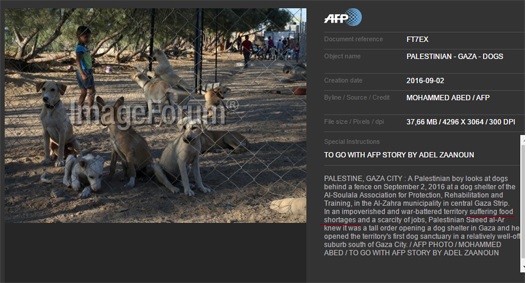
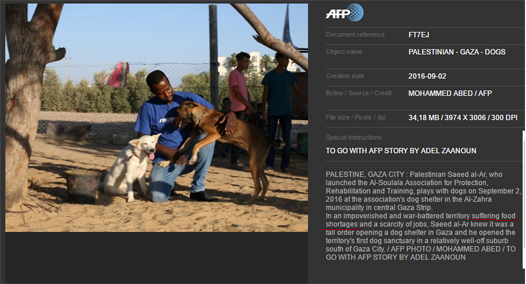
An Agence France Presse article yesterday about a dog shelter in the Gaza Strip begins:
In an impoverished and war-battered territory suffering food shortages and a scarcity of jobs, Saeed al-Ar knew it was a tall order opening a dog shelter in Gaza.
AFP photo captions about the dog shelter likewise contained the claim about alleged food shortages in the Gaza Strip.


While food security is a major problem in the Gaza Strip due to poverty, the territory is not suffering from food shortages. As the World Food Programme reports, “Though food is readily available in Palestine, prices are often too high for poor families to afford.”
As AFP reported on Feb. 10, 2016, “nearly half of the population has insufficient access to healthy food.”
According a 2014 joint press release by the Palestinian Central Bureau of Statistics (PCBS), The Food and Agriculture Organization of the United Nations, and the United Nations Relief and Works Agency for Palestine Refugees in the Near East and the World Food Programme:
In Palestine, food insecurity is driven by high rates of poverty resulting from unemployment, which is in part due to ongoing Israeli access and movement restrictions, as well as high prices for food and economic shocks. Food is available in markets, but expensive, so households reduce the variety and nutritional value found in their diet. The majority of Palestinians in the Gaza Strip and the West Bank spend more than half their income on food. (Emphasis added.)
CAMERA has contacted AFP to request a correction. Stay tuned for an update.





Search:
Search this site: