
Recent Entries:
Month: May 2016
May 19, 2016
Israelis Discover Cure for Leukemia – Does the Media Care?

With the millions of words the New York Times, New Yorker, BBC, et al. have splashed on their pages decrying every new foundation poured in some obscure Israeli settlement or bemoaning the hardship imposed on Palestinians forced to endure delays at security checkpoints, will the legions of journalists and pontificators find space to report on the most extraordinary, life-changing developments coming out of Israel?
Millions have suffered the devastating consequences of Leukemia, a blood marrow cancer that strikes both the young and the old. The disease knows no ethnic or religious boundaries. Until recently, Acute Myeloblastic Leukemia, the most common form, was a death sentence. Despite extensive chemotherapy regimens that left patients tortured by pain and nausea, most of the stricken eventually succumbed to the disease.
But over the past few years, a number of small Israeli medical research firms have devised new compounds and technologies that hold the promise of targeting Leukemic cells with the same incredible accuracy that Iron dome targets incoming Hamas missiles, leaving the rest of the patient’s body intact and producing a permanent cure. These developments should they pan out, represent a revolution in medicine and in the battle against cancer.
Will the Times or the BBC take time off from their relentless criticism of Israel to provide their audiences with another perspective of Israel? Will David Remnick, editor of the highbrow New Yorker, which reliably treats its readers to periodic exposures of israel’s flaws and alleged injustice toward Palestinians, assign a writer to produce an in-depth report of this story?
Don’t bet on it. Providing the world with a cure to a dreaded disease is not the Israel these media organizations care to portray.
May 18, 2016
Bias at NYT Arts/Cultural Desk

What Hamas refers to as “resistance against Israel’s occupation” A NYT article by James Glanz and Rami Nazzal seemed straightforward at first glance, discussing plans for the opening of a new Palestinian museum in Birzeit on Wednesday. The article appeared online on May 16 under the headline “Palestinian Museum Prepares to Open, Minus Exhibitions” and a day later, on the first page of the Arts & Culture section of the print edition, headlined “Palestinian Museum Is Set to Open, Empty of Art.”
When they noted that the museum’s opening ceremony was slated for “a few days after the 68th anniversary of what Palestinians call the Nakba, or catastrophe,” the reporters appropriately made it clear that this was the Palestinians’ terminology for “Israel’s founding and the conflict that followed.” But while they indicated that as a result, “hundreds of thousands” of Palestinians were “displaced,” they did not explain the relevant circumstances, namely, that Arab leaders had invaded and declared war on the newly established State of Israel.
Worse, though, was that elsewhere, the authors themselves adopted the Palestinian narrative and presented it as fact in their own voices. They wrote:
In the West Bank, where Palestinians have for years struggled to build political and civic institutions while resisting Israel’s occupation of the territory, the fate of the exhibition may say as much about the realities of Palestinian society as any art collection could. [emphasis added]
Objective and knowledgeable readers may well recognize that “resisting Israel’s occupation” is the justification invoked by Hamas and other Palestinian terrorist groups for carrying out murderous attacks on civilian targets in Israel, but others may be misled by what amounts to the reporters’ own stamp of approval on the biased language.
May 18, 2016
Al-Monitor Spins History

Al-Monitor ran a piece, (“How Palestinians plan to mark 50 years of occupation,” May 15, 2016) outlining “a major Palestinian and international political and public campaign” being planned for next year to mark five decades since the Six-Day War of 1967. The theme of the planned campaign will be “enough with the occupation.”
Author Uri Savir writes:
A senior PLO official in Ramallah told Al-Monitor on condition of anonymity that “50 years of military occupation spells to every single Palestinian that we, with whatever means we possess, have to end our humiliation and gain our independence. Strategically, June 2017 is an opportunity to place the Palestinian issue on the international agenda.”
[…]The PLO official said that one cannot rule out a “50-year occupation intifada,” but that Palestinian President Mahmoud Abbas prefers to avoid it: “In 2017, the rules of the game will change. We have come to the end of our patience.”
Savir does not acknowledge that these comments amount to endorsements by Palestinian officials of the murder Jews and Israelis in terrorist projects. Savir, founder of the Peres Center for Peace and the NGO’s current honorary president, parrots incendiary PLO talking points and ignores the incitement of Palestinian violence which the PLO officials themselves unabashedly glorify.
Furthermore, he not only ignores the Jordanian occupation of the West Bank prior to 1967, he also fails to mention numerous offers of statehood made to the Palestinians by successive Israeli governments since. Instead, he chastises Israel:
“Enough with the occupation” should be the Israeli slogan instead. Occupation is the biggest strategic danger to Israel’s identity, to its security and its international relations. It is turning Israel into a binational, immoral state, and it carries severe ramifications for Israel’s democracy.
With pithy historical blindness, Savir places the weight of the conflict entirely on Israel’s shoulders, giving the Palestinians a free pass even as they admit to turning to terrorism. Al-Monitor, the 2014 recipient of the International Press Institute’s (IPI) Free Media Pioneer Award, eliminates any semblance of contextualize reporting, offering a biased perspective of the last half-century of events in Middle East.
–Rachel Frommer, CAMERA Intern
May 17, 2016
‘Stabbing Intifada’ Declines, Tribune Papers Tell Half the Story

The Tribune Newspapers—including The Los Angeles Times, Chicago Tribune and Baltimore Sun—asked, as a Times headline put it, “What’s behind the sharp decline in lone-wolf stabbing attacks in the West Bank?” (May 11, 2016). The same report appeared that day in The Tribune and a shorter version (“Palestinian stabbings decrease, officials say”) ran in the May 10 print Baltimore Sun.
Special correspondent Joshua Mitnick’s timely article included some useful background. It indirectly and anonymously quoted a Palestinian security commander saying, “Many of the attacks [against Israelis] seem to be carried out by youths who suffer from depression or economic hardship,” as well as those who “want revenge for relatives or friends injured in the violence.”
But the article omitted too much. For example:
*It portrayed the Palestinian “stabbing intifada” as “being carried by individuals without ties to militant groups.” But according to a detailed analysis by Adam Shay and Pinhas Inbari (“the Palestinian Authority-Fatah’s Incitement Strategy,” Jerusalem Center for Public Affairs, Feb. 29, 2016), “rather than plan and coordinate violent attacks, [Palestinian Authority President Mahmoud] Abbas uses the Palestinian public debate and the media as a mechanism for instigating waves of violence. The public debate also uses a dialogue based on cultural codes, which broadcast a specific, pre-defined meaning to the Palestinian listener.
“When President Abbas says that ‘they [the Jews] have no right to defile them [the al-Aqsa mosque and the Church of the Holy Sepulcher]…we will not allow them, and we will do everything in our power to protect Jerusalem,’ he is in fact giving permission and legitimacy to intensify the struggle. Within the context of the struggle this is an authorization to move from stone-throwing to knifing and vehicular attacks, as was indeed the case.”
*The Tribune report misses what Shay and Inbari describe as Abbas’ strategy to circumvent Israel’s insistence on direct negotiations toward a “two-state solution” and Israeli-Palestinian peace. Abbas outlined this in January, 2015, eight months before the “stabbing intifada” erupted, declaring in reference to sporadic anti-Israel attacks already occurring: “The popular intifada will continue until the occupation is over and there will be no return to negotiations without full recognition of Palestinian rights. Movement towards a settlement will be achieved through international intervention.” Palestinian support of French efforts to convene an international conference in place of direct talks with Israel reflects that strategy.
*The Tribune Newspapers quote PA official and Fatah movement member Kadoura Fares as claiming of “the stabbing intifada” that “the Palestinian national movement didn’t lead this wave.” Perhaps not with a direct order, but by setting and maintaining the atmosphere, including repeated official praise of “martyrs, it helped spark and sustain that wave. See, for one example among many “USA Today Downplays Anti-Jewish Violence as Clashes,” CAMERA, March 7, 2016.
*“What’s behind the sharp decline in lone-wolf stabbing attacks” states, without attribution, “Palestinians want to form an independent state in the West Bank and Gaza Strip, with East Jerusalem as their capital.” This formula tends to appear chronically in news media coverage, usually—as here—out of context. That Palestinian leaders rejected U.S.-Israeli proposals of a West Bank and Gaza “Palestine” with eastern Jerusalem as its capital in 2000 and 2001, replying with the bloodshed of the second intifada, and rebuffed a similar Israeli-only offer in 2008 virtually always goes unmentioned.
In fact, recent polling indicates that pluralities of Palestinian Arabs continue to oppose a “two-state solution,” still favor elimination of Israel as a Jewish state and support anti-Israeli violence over non-violence. See “Poll: Majority of Palestinians Favor a New Intifada,” CAMERA, Sept. 25, 2015
Yes, Israeli authorities have credited PA officials with trying recently to minimize support for “the stabbing intifada,” including among young people via social media. This Mitnick, formerly of The Wall Street Journal, now a Tribune Newspapers special correspondent, reports. But omitted is those same officials’ role in stimulating such attacks in the first place. Also missing is the persistence of Palestinian hostility to Israel and opposition to peace with it as a Jewish state, which fuels those crimes.
May 17, 2016
Washington Post Notes Israel’s Cyber Strength

The Washington Post’s “Cyber-city rises from the desert in Israel” (May 15, 2016) highlighted Israel’s growing power in the realm of cyber-security—a strength made possible, in part, through innovation and cooperation.
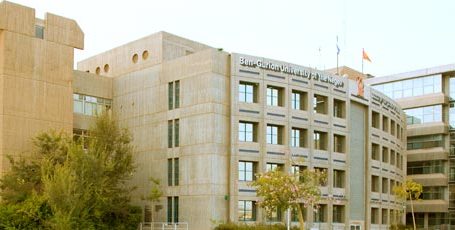
The Post reported that in the middle of the Negev Desert, in southern Israel, a “cyber-city is rising to cement Israel’s place as a major digital power.” Beersheba, population 200,000 and home to Ben-Gurion University of the Negev, “will concentrate some of the country’s top talent from the military, academia and business in an area of just a few square miles.”
Beersheba houses a technology park that includes global companies such as PayPal, Lockheed Martin and Deutsche Telekom, among others. Unit 8200, a signals intelligence arm of the Israeli military (roughly analogous to the U.S. National Security Agency), will soon be located at the park. The Shin Bet, Israel’s domestic security agency, will also take up residence at the complex adjacent to Ben-Gurion University.
The school will work with these global companies and Israeli military and security agencies to complete a cyber emergency response team.
In 2014, Israel launched the response team, as part of the National Cyber Security Authority, to respond to crises. Growing cyber threats to Israel, including those emanating from Iran, have helped to provide an incentive. As The Post article detailed, constant attacks, virtual as well as physical, against the Jewish state, as well as “cross-pollination” from different sectors, have helped propel Israeli growth in cyber.
The Post quoted Nadav Zafrir, a former head of Unit 8200, on the combined potency provided of private and public entities:
“What you get out of that is the research capabilities that academia brings, the real-world knowledge that the [tech firms] bring, the hands-on experience that the military brings, alongside the entrepreneurial ability that the start-ups bring.” The Post seems to concur, concluding that “no other country is so purposefully integrating its private, scholarly, government and military cyber-expertise.”
These different organizations reflect Israel’s emphasis on cyber-security as well as its unique approach to the problems—and opportunities—posed by threats emanating online.
Eviatar Matania, the head of the National Cyber Bureau, told The Post that Israel “gains an advantage over other countries” through a high-tech and innovation-driven culture that emanates, in part, from cyber-security. According to Matania, the result is that Israel sees the cyber realm “not just as a threat to mitigate, but also as one of our economic engines.”
As CAMERA has noted (“Defense One: Israel is a Rising Cyber ‘Super Power,’” Feb. 2, 2016), Israel currently has more than 300 cybersecurity companies and accounts for 20 percent of the world’s private investment in cyber. An estimated $6 billion in cybersecurity technology is exported by the Jewish state.
It seems likely that Israel’s strength in cyber will continue to grow. By the end of 2017, The Israeli Defense Forces (IDF) are hoping to establish a cyber-command to “merge the missions of attack and defense.”
The elite cyber-units recruit at an early age. The Post noted that “the cream of the computer science and math crop are scouted by the elite military cyber-units when they are as young as 14.” Military cyber-officers mentor students at four Israeli high schools that offer advanced math and computer science curriculum. After serving Israel, cybersecurity specialists will have an opportunity to work for private companies, including those housed at Beersheba.
IDF Capt. Rotem Bashi, who heads a cyberdefense unit, told The Post, the “next war will be in cyberspace.” If so—as this Washington Post article detailed—Israel intends to be ready.
May 17, 2016
ICNA’s Selective Outrage on Bangladesh Violence

The Islamic Circle of North America (ICNA), a non-profit organization that claims to represent the interests of Muslims in America, has selectively condemned violence in Bangladesh. Although ICNA denounced the execution of Maluana Motiur Rahman Nizami, a Bangladeshi Islamist, the organization has been silent about Islamist attacks against secular writers and religious minorities in the country.
ICNA called the execution of Nizami “another shameful act of judicial killing which is part of the ongoing brutal persecution of political opponents by Sheikh Hasina’s [Hasina Wazed, the current prime minister of Bangladesh] government.”
The Investigative Project on Terrorism (IPT), a Washington D.C.-based organization that monitors extremist groups, noted that Nizami “was a top leader of Bangladesh’s Jamaat-e-Islami (JI) party and a former president of its student affiliate, Islami Jamiat-e-Talaba Pakistan. He was also a permanent member of the Muslim World League, a Saudi-funded organization created in 1962 for the global propagation of Wahhabi Islam.”
IPT noted that “ICNA’s strong condemnation of Nizami’s execution and those of other JI-tied Bangladeshi Islamists in the past stands in sharp contrast to the Islamist group’s notable silence following recent horrific terror attacks in Bangladesh that have included the hacking to death of a Bangladeshi academic, gay rights activist, Hindu tailor, and Sufi leader. Some of these attacks have been linked to the Islamic State and al-Qaida, raising the total number of terrorist slayings of secular bloggers and critics of radical Islam in Bangladesh to 20 since 2013.”
ICNA has shown a willingness to speak with many in the U.S. news media—who often treat the group as a credible source, failing to fully identify the Circle’s radical roots, associations and activities (see, for example “Baltimore Sun Gives Islamic Circle a Free Pass,” CAMERA, June 3, 2015).
As CAMERA has noted, the Islamic Circle is a subsidiary of the Islamic Society of North America, a Muslim Brotherhood spin-off. The Egyptian-based, Sunni Brotherhood seeks to spread sharia (Islamic law) globally. ICNA is part of a network of groups, including the Council on American Islamic Relations (CAIR) that stemmed from the Brotherhood’s North American initiatives.
In 2010, the Anti-Defamation League (ADL) noted that a December 2009 ICNA conference featured calls to destroy Israel and distributed the writings of Anwar al-Awlaki—an American-born leader of al-Qaeda in the Arabian Peninsula who was later killed by a U.S. drone strike.
ICNA’s magazines have featured interviews with terrorist leaders in Pakistan and encouraged jihadi recruitment in Kashmir. In December 2009, five young members of a JI mosque in Virginia were arrested and convicted on terrorism charges after trying to join a Pakistani terrorist group.
In Dec. 6, 2010 report, IPT pointed out that a 2010 ICNA Member’s Hand Book spelled out that “the organizations ultimate goal is ‘the Establishment of Islam’ as the sole basis of global society and governance. It also encourages members to deceive people in its proselytizing campaign to help fulfill this goal.”
Nizami was a violent man. IPT reported that he was convicted in 2014 by a Bangladeshi war crimes tribunal for leading a “secret killing squad called Al-Badar Bahini, which was created by the JI under orders from Pakistani intelligence” during Bangladesh’s 1971 war.
The Islamic Circle’s selective outrage over violence in Bangladesh is newsworthy. Media failure to note it is worrisome.
May 17, 2016
AFP’s Lopsided Account of Slain Palestinian Teen

When a media outlet reports on a fact sheet published by a big international NGO, what is its responsibility to readers? Do journalists have an obligation to flag shortcomings in NGO reports? AFP, apparently, thinks not.
In a widely published article, AFP summarized a UNICEF fact sheet claiming that “25 Palestinian children killed in 3 months.” The UNICEF provides identifying details (date and location) in just two out of the 25 alleged cases. AFP faithfully relays UNICEF’s flawed account of one of the two cases:
UNICEF cited the example on October 25 in Hebron in the West Bank of a 17-year-old girl who was “taken by IDF (Israel Defence Forces) soldiers for a search, shot with at least five bullets and killed”.
“Israeli authorities said that she had attempted to stab a policeman, however an eyewitness stated that she was not presenting any threat at the time she was shot, and was shouting that she did not have a knife,” it said.
Relying solely on the UNICEF report, AFP failed to fulfill its duty to independently fact-check. A quick search reveals that Amnesty International, which has no great love for Israel, noted this relevant information concerning the Oct. 25 Hebron incident:
A photo of Ershied’s body shows a knife lying near the body, and the Israeli police spokesperson has stated that she attempted to stab a border policeman.
In other words, there is a photograph that supports the Israeli account of events, a photograph that AFP ignored.
In recent months, following terror attacks, the publication – official or otherwise – of photographs showing the weapons used in the attack have been commonplace. Despite such evidence, Palestinians frequently insist that slain terrorists are innocent. In an attempt to explain the contrary photographic material, a bizarre conspiracy theory claiming Israeli forces plant knives on dead Palestinians thrives in Palestinian social media, and is even embraced by some Palestinian officials.
That UNICEF failed to note the photograph does not exonerate AFP from its responsibility to note the photograph of the knife. Whether or not AFP subscribes to outlandish anti-Israel conspiracy theories, it carries an obligation to its readers to fully present the facts, even when its NGO sources don’t.
May 16, 2016
Iranian Military Admits Anti-Israel Missile Test

A top member of Iran’s military has admitted that the Islamic Republic test fired a ballistic missile inscribed with a call to destroy Israel.
USA Today reported that “Brig. Gen. Ali Abdolahi, the Iranian military’s deputy chief of staff, told Iran’s Tasnim news agency that Iran fired the test missile two weeks ago and that it was accurate to within 25 feet, which he described as zero error (“Iran defense chief denies long-range missile test,” May 10, 2016).”
Abdolahi’s admission of the tests in mid-April follows another ballistic missile test which took place in March and involved two types of missiles, Qadr-H and Qadr-E, both of which were launched from the East Alborz Mountains in northern Iran. The tests violated a U.N. Security Council resolution, according to a confidential report made in March by the council’s panel of experts on Iran (“Exclusive: Iran missile tests were ‘in defiance of’ U.N. resolution—U.S., allies,” Reuters, March 30, 2016).
USA Today reported that Iranian Defense Minister Brig. Gen. Hossein Dehqan denied that a missile test “of that distance” (1,250 miles) took place in mid-April. Dehqan also claimed that the United States and Saudi Arabia are conducting a “propaganda campaign to make the world believe Iran’s missiles are not for defensive purposes.”
Yet, evidence suggest that missiles being developed by Iran have an offensive purpose.
Reporting the tests in March, USA Today noted that, “two months ago, Iran test-fired two ballistic missiles, one of them with the phrase ‘Israel should be wiped off the Earth’ written on it in Hebrew. Iranian officials say the phrase was added by workers on the ground and was not a decision made by higher-level officials.”
CAMERA has noted (“The Iranian Missile Photo That CNN Missed,” March 21, 2016) that images of the missiles “emblazoned with the anti-Israel graffiti” were broadcasted on Iranian state-sponsored TV in March. Despite this, CNN erroneously reported at the time that Iranian media had not published photographs of the inscribed missiles and that CNN “could not independently confirm” whether the missiles were launched with the genocidal language displayed.
Similarly, in its report on the March missile tests, The Washington Post claimed that “Iran’s semiofficial Fars News Agency reported that the missiles tested Wednesday were stamped with a message in Hebrew: ‘Israel must be wiped out.’ However, there was no confirmation of the report, and no such markings were seen in state-issued photos and video (“Biden: Iran under close watch amid reports of missile tests,” March 9).”
(more…)May 16, 2016
On ‘Nakba Day,’ a Beersheva ‘Refugee’ & AFP Time Warp
May 16 Update, 8:52 a.m. EST: AFP Corrects Photo Caption on Palestinian Refugee
Much has been said about the United Nations’ unique definition for Palestinian refugees, probably the only group of displaced people in the entire world whose descendants also receive refugee status.
Among this group of special refugees — the descendants of those Palestinians who fled or were expelled in 1948 –is a smaller, more rare group of time-defying Palestinian refugees: though they were born after 1948, somehow, inexplicably, they were there in 1948.
Five years ago, for instance, on “Nakba Day,” Haaretz interviewed 57-year-old Salman Fakherldeen, who miraculously remembered events from 1948, seven years before he was born.
This year, Agence France Presse photographer Said Khatib apparently located another example of this rare breed of a post-1948 refugee, “refugee Aisha, 53,” formerly of Beersheva. The photo and caption follow:

The caption states:
Palestinian refugee Aisha, 53, who says is a former [sic] inhabitant of the town of Beersheva, waves a group of keys outside her home in the Khan Yunis refugee camp in the southern Gaza Strip on May 15, 2016, on the 68th anniversary of the “Nakba”.
“Nakba” means in Arabic “catastrophe” in reference to the birth of the state of Israel 68-years-ago in British-mandate Palestine, which led to the displacement of hundreds of thousands of Palestinians who either fled or were driven out of their homes during the 1948 war over Israel’s creation. They key symbolises the homes left by Palestinians in 1948.
Aisha, who is reportedly 53 years old, could not have fled or been driven out of her Beersheva home 68 years ago, as the caption strongly suggests. She possibly could have lived in Beersheva and decided to move to Gaza for marriage, for example, but then she is not a “refugee” forced out of her home in the 1948 war, as the caption clearly implies.
Was Aisha an inhabitant of Beersheva? If she was, why did AFP conflate her decision to move with the fate of Palestinian Arabs who left in 1948 and became refugees? If she opted to leave Beersheva, how exactly, is she a “refugee,” as the caption identifies her?
CAMERA has contacted AFP to request a clarification. Stay tuned for an update.
May 13, 2016
Michigan Public Radio Considers It Controversial to Acknowledge Israel’s Birthday

Deadline Detroit asks whether Michigan Public Radio was right to reject a donor’s request to wish Israel a happy birthday?
According to the publication, Michigan Radio, an NPR affiliate, offered one of their donors the opportunity to have a message of her choice read on air, but when it turned out she wanted to wish Israel a Happy Birthday in honour of Yom Ha’atzmaut, Michigan Radio demurred, arguing that such a message
would compromise the station’s commitment to impartiality and that it crosses over into advocacy, or could imply advocacy.
Donor Lisa Lis was upset and explained why:
Why would Public Radio need to be impartial about a legally recognized country other than the fact, many want her wiped from the face of the earth. Would it be a problem if it were the birthday of England, Norway or South Sudan?
Israel is a hot button country that the world has accepted as questionable and debatable and the major infraction Israel has committed is purely her existence. By the way, I truly look forward to expressing my same salutation when Palestine can celebrate her birthday.
Do you agree?






Search:
Search this site: