
DEA Uncovers Hezbollah Drug and Money Laundering
The United States Drug Enforcement Administration (DEA) announced that it arrested top leaders of a European cell of Hezbollah, a U.S.-designated terror group, according to a Feb. 1, 2016 press release. Hezbollah, the Lebanese Shi’ite “Party of God,” is an Iranian surrogate with reported worldwide reach.
The DEA said the arrests targeted members of Hezbollah’s External Security Organization Business Affairs Component (BAC), “which is involved in international criminal activities such as drug trafficking and drug proceed money laundering.” Profits made in these illicit efforts are used to buy weapons.
The arrests were made as part of DEA’s Project Cassandra, an effort to clamp down on the BAC, which traffics cocaine in the United States and Europe. “The most significant arrest” according to the agency, was that of Mohamed Noureddine, a Lebanese money launderer who used his Lebanon-based company, Trade Point International S.A.R.L to launder Hezbollah funds. Noureddine has “direct ties” to Hezbollah elements in both Lebanon and Iraq.
Over the past year, U.S. Department of Justice investigations into Hezbollah financing have resulted in the indictments of individuals living in Columbia, Lithuania, France and the United States.
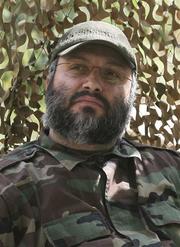
The BAC was founded by Hezbollah international operations head Imad Mughniyah. Mughniyah, reportedly behind the 1983 bombing of the U.S. Marine Corps barracks in Beirut, among many other attacks, was killed in Damascus, Syria on Feb. 12, 2008 reportedly in a joint U.S.-Israel operation conducted by the Central Intelligence Agency (CIA) and its Israeli equivalent, the Mossad. The Hezbollah component is currently overseen by Abdallah Safieddine.
According to DEA, its investigation began with a look into the Lebanese Canadian Bank. Working with authorities in France, Belgium, Germany and Italy, the agency “uncovered an intricate network of money couriers who collect and transport millions of euros in drug proceeds from Europe to the Middle East. The currency is then paid in Columbia to drug traffickers.” The DEA notes that a “large portion” of the profits go through Lebanon and a “significant percentage” benefit terrorist organizations, particularly Hezbollah.
The U.S. Department of Treasury announced on January 28 that sanctions have been placed on more than 100 people and entities associated with the terrorist group (“U.S. Puts Sanctions on Alleged Hezbollah Money Launderers,” The Wall Street Journal, January 28).
Writing for The Wall Street Journal’s online Think Tank blog, analyst Matthew Levitt, says that Hezbollah is “facing hard times” as a result of the group’s intervention in the Syrian civil war, a decline in oil prices that have “led Iran to cut back support” and sanctions (“The Crackdown on Hezbollah’s Financing Network,” January 27). Levitt is a former Treasury Department deputy assistant secretary who has written extensively about Hezbollah and sanctions, and is currently the director of the Stein Program on Counterterrorism and Intelligence at the D.C.-based think tank, Washington Institute for Near East Policy.
Levitt notes that sanctions have targeted foreign companies that supply material for unmanned aerial vehicles (UAV’s) Hezbollah uses in Syria and Israel. The analyst says investigations into Hezbollah’s financing have “led to the inner circle” of the group’s leadership and are increasingly putting pressure on Hezbollah leader Hassan Nasrallah.
Hezbollah has long denied that it engages in drug trafficking and money laundering. In 2011, responding to a criminal complaint in a New York federal court, the organization claimed: “The United States’ allegations that Hezbollah is funding its activities illegitimately is merely another attempt to tarnish the image of the resistance…Hezbollah categorically denies the false charges of its direct or indirect involvement in money laundering, drug trafficking or illegal banking operations.”
But then, Hezbollah also has denied targeting Israeli civilians in terrorist attacks throughout the world and starving the Syrian town of Madaya via siege on behalf of Syrian dictator Bashar al-Assad—actions it has taken. From lies to murder, the group is nothing if not consistent.

More from SNAPSHOTS
Professor John Quigley Falsely Condemns Israel and U.S. Support in His Syndicated Column
April 30, 2019
John B. Quigley In his widely distributed April syndicated opinion piece mainly about ISIS, the Islamist terrorist entity, John B. Quigley, an Ohio State University law professor, argues that claims of an imminent ISIS resurgence [...]
The New York Times’ Slow Reaction to Hamas Crackdown on Palestinian Protesters
April 4, 2019
The New York Times took a slight jab at Hamas, the terrorist organization that rules the Gaza Strip, in a recent story about Hamas's crackdown on Palestinian protesters who spoke out against its policies in [...]
CNN’s Zakaria Deals With U.S. Proclamation Recognizing Golan As Part Of Israel
April 3, 2019
Fareed Zakaria hosted an eight-minute discussion of the Golan matter at the end of his weekly (weekend) program, “Global Public Square “ (GPS) hour-long Cable News Network (CNN) broadcast. The broadcast, on both CNN and [...]
NY Times Reporter David Halbfinger Editorializes Israel as “Brutal”
March 6, 2019
New York Times Jerusalem bureau chief David Halbfinger Israel, according to the New York Times, is a brute. A March 3 news analysis piece—not an opinion piece—by the newspaper's Jerusalem bureau chief David Halbfinger uses [...]
Palestinian Malevolent Indoctrination Exposed; Mainstream Media Are Indifferent
February 26, 2019
Palestinian Media Watch (PMW), an Israel-based non-governmental organization, analyzes and presents in English to the world the ongoing inflammatory indoctrination of Palestinians in Arabic particularly via Palestinian Authority (PA) television (West Bank). PMW is a [...]
Did WCC Activists Attend A Birthday Party Promoted by Palestinian Extremist Organization?
February 4, 2019
The video is a bit fuzzy and grainy. But the footage of birthday party for Shadi Farar, a 12-year-old Palestinian boy who spent three years in an Israeli jail on charges of intent to murder, [...]