
Debunking Old Lies: Focus on Tantura
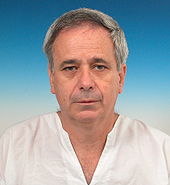
The Israel bashers are again cycling through their tired repertoire of long-discredited lies, aided by notorious anti-israel activist/University of Exeter professor, Ilan [“The struggle is about ideology, NOT about facts“]Pappé.
Yet again, the lie claiming that Israelis perpetrated a massacre of Arab residents of Tantura in 1948 is dredged up. Never mind that the originator of the lie was sued for libel. Never mind that he retracted his claims. Never mind that his sources denied his lies. It is a good enough lie for the famously dishonest Israel-bashing website Electronic Intifada and its frequent contributor Jonathan Cook to promote, resorting to a conspiracy theory of a cover-up by Israel and a vast network of its supporters , including CAMERA.
Let us re-examine the facts:
Theodore (Teddy) Katz, a kibbutznik and supporter of the left-wing Meretz party, submitted a Master’s thesis in 1998 to the University of Haifa, alleging a previously unknown massacre by Israel’s army had taken place in the Arab fishing village of Tantura during the1948 war. Purportedly based on testimonies he had gathered from 60 Tantura residents, Katz claimed that over 200 Arab villagers had been lined up and slaughtered by the IDF’s 33rd battalion after surrendering on May 22-23, 1948.
In an apparent attempt to join the ranks of the post-Zionist “new historians” who professed to re-examine Israel’s history and dispel what they claim are “Zionist myths” of heroism and bravery, Katz contacted journalists and television crews to try to publicize his story across the country. On Jan. 21, 2000, the Israeli daily Ma’ariv carried a five-page story by journalist Amir Gilat promulgating Katz’s claims.
Having discovered they were publicly accused of war crimes in the pages of Israel’s largest newspaper, veterans of the 33rd battalion of the Alexandroni Brigade were outraged. They maintained that the battle for Tantura was a strategic one, an attempt to stop the maritime smuggling of arms and food and to prevent the Haifa-Tel Aviv road from being cut off; and that throughout the fight for survival in a bloody war launched by the Arabs, they had maintained the strictest ethical standards. While the battle for Tantura was difficult – 14 members of the IDF battalion and about 40 Arabs were killed in street fighting – the veterans insisted Katz had lied about a massacre.
Indeed, they noted that by 10 a.m. on the morning of the alleged massacre, 99 percent of the villagers had already been transferred out of Tantura —the women to the nearby village of Faradis, and the fighters to the Zichron Ya’akov police station. In April 2000, attorney Giora Erdinast, a Peace Now activist and son-in-law of one of the battalion members, agreed to represent the veterans and filed a libel suit in Tel Aviv court against Teddy Katz. Katz reportedly received approximately $8,000 from former Palestinian Authority minister Faisal Husseini to pay for his defense.
During the December 2000 trial, attorney Erdinast discredited Katz’s so-called evidence. For example, in his thesis Katz had quoted a central witness called Abu Fahmi saying that the IDF had rounded up villagers, lined them up against the walls and murdered them. Erdinast, having obtained a court order forcing Katz to hand over the tapes of his interviews, demonstrated that there were no such quotes. On the contrary, Abu Fahmi had repeatedly asserted that the IDF did not murder the villagers after they surrendered.
Confronted with many such gross discrepancies between the quotes in his thesis and the recorded interviews, Katz insisted under oath that he had been misunderstood and that he had never believed there was a massacre. Under court order, he later signed an apology and agreed to publish ads at his own expense publicizing his disavowal of the massacre claim. He wrote:
After checking and re-checking the evidence, I am now certain beyond any doubt that there is no basis at all for the allegation that after Tantura surrendered, there was any killing of residents by the Alexandroni Brigade, or any other fighting unit of the IDF. I would like to clarify that what I wrote was misunderstood, and that I did not mean to suggest that there had been a massacre in Tantura, nor do I believe that there ever was a massacre at Tantura..
But within a day, Katz recanted his apology, claiming that because he was in poor health he was pressured by his family to sign an apology in exchange for dropping the charges against him. He insisted now that he was “sure there was a massacre even if I can’t know because I wasn’t there.” The judge refused to accept Katz’s retraction, and his appeal to a higher court was similarly dismissed.
Meanwhile, University of Haifa appointed a committee to re-examine Katz’s thesis. The committee discovered fabrications and distortions of quotes in Katz’s work and disqualified the thesis, removing it from the university’s bookshelves. Katz accepted the offer to revise his thesis, and resubmitted it in 2002 to five new university-appointed examiners, but the new, lengthier thesis did not receive passing grades; Katz was awarded a “non-research” degree.
Ilan Pappé, Katz’s mentor and unofficial advisor – Katz’s thesis director was Druze historian Kais Firro, but the work was dedicated to Pappé,”my teacher and friend” – made the student’s case his cause de jour, insisting Katz’s claims were true despite the discredited evidence. Feeding Palestinian eagerness to adopt the debunked “Tantura massacre” as part of their historical narrative, Pappé wrote an article for the Journal of Palestine Studies, expanding upon Katz’s original claims and excoriating the Haifa university for not accepting “a solid and convincing piece of work whose essential validity is in no way marred by its shortcomings.” Indeed, the introduction to Pappé’s article stated:
Though the researcher, Teddy Katz, is himself a Zionist, the case sheds light on the extent to which mainstream Zionism is prepared to go in discouraging research that brings to the fore such aspects of the 1948 war as “ethnic cleansing.”
Pappé then used his article to appeal to the international academic world to pressure University of Haifa to back down on the decision to disqualify Katz’s thesis. Describing the work as the revelation of “one of the worst massacres in the war” in a letter to American and British historical and Middle Eastern societies, Pappé requested their intervention because “Israeli academics cannot find in themselves the courage to remain loyal to the basic rules of academic research and freedom.”
This letter, as well as Pappé’s public criticism and personal abuse of his colleagues, resulted in a formal complaint by University of Haifa’s dean of humanities, Yossi Ben-Artzi, seeking Pappé’s dismissal. Ben-Artzi emphasized that his complaint was “not a matter of freedom of speech or an attempt to attack Pappé for his anti-Zionist opinions” but rather “a matter of non-collegial, unethical and immoral conduct, lies, badmouthing, and impudence.”
But, according to an official statement by the University of Haifa, despite Pappé’s transgression of all common ethical standards of academic life …Pappe was never summoned by the disciplinary committee as the committee’s chairperson decided not to pursue the complaint. Moreover, and contrary to Dr. Pappe’s claim, the university made no attempt to expel him.
Pappé does not pretend to objectively search out the truth. He admits that he is driven by ideology rather than facts. In his Journal of Palestine Studies article, he acknowledged that Teddy Katz was “well aware of the ‘murkiness’ of the picture derived from the memories of participants and survivors so long after traumatic events,” that the student “was not interested in fine details,” or “certainties about exact chronology and names and precise numbers.” Pappé dismissed the need for such rigor when writing a historical thesis.
Nevertheless, the professor managed to mobilize an international community of Israel’s detractors to penalize major academic institutions for pursuing the truth. In 2005, the British Association of University Teachers decided to boycott Israeli universities, based on Pappe’s lies. This decision sparked a bitter internal debate and an international firestorm over the executive committee’s kangaroo-court procedure and judgement. Worldwide criticism of the AUT’s biased decision-making was so great that on May 26, 2005, just over a month after the original vote to boycott, the committee reconvened and rescinded its resolution.
Ten years later, Pappé continues to lie and disseminate his poison.


More from SNAPSHOTS
Jordan Confirms Attack on Guard, Reuters Conceals
August 2, 2017
Jordanian officials agree with Israeli officials that Jordanian carpenter Mohammed Jawawdah attacked Israeli embassy guard Ziv Moyal with a screwdriver before Moyal shot him dead. But Reuters refuses to report the Jordanian confirmation. In story [...]
Half of Foreign Aid to Palestinian Authority Goes to Terrorists, Media Shrugs
July 31, 2017
The new budget for the Palestinian Authority (PA) increases aid to imprisoned terrorists and their families by 13 percent, according to a July 19, 2017 report by Palestinian Media Watch (PMW), a non-profit organization that [...]
Insulting Apology from Islamic Center of Davis
July 27, 2017
“If the sermon was misconstrued, we sincerely apologize to anyone offended. We will continue our commitment to interfaith and community harmony.” That’s the dishonest, cowardly, meaningless, and insulting apology offered by the Islamic Center of [...]
Former Peace Negotiator Acknowledges Mistakes
July 18, 2017
Aaron David Miller A former American Arab-Israeli peace negotiator, Aaron David Miller, acknowledged that the U.S. “overlooked” negative Palestinian behavior in its attempts to fashion a two-state solution. Miller, a former U.S. State Department employee [...]
The Washington Post Notes Growing Hamas-Fatah Tensions
July 18, 2017
Mohammad Dahlan A July 13, 2017 Washington Post report (“Abbas increases Gazans’ pain in feud with Hamas”) highlighted growing tensions between Hamas, the U.S.-designated terror group that rules the Gaza Strip, and Fatah, the movement [...]